

I loved my year working in the NBA, which is exactly why I feel comfortable being transparent about both what made the experience incredible and what made it complicated.
For years, becoming an NBA scout was one of my biggest professional goals.
I had spent more than a decade evaluating prospects independently, traveling around the world to watch basketball, building relationships and trying to create my own path into the league. Eventually, I got the opportunity I had been working toward.
I moved with my family to Paris and became an international scout in the NBA. It was my dream scenario, living in Europe, scouting basketball for an NBA team and getting what I believed was the perfect opportunity to launch my career inside the league.
Eight months later, it was over.
Front office changes came, my position was eliminated, and my first experience working inside an NBA organization ended much sooner than I ever expected.
I’ve had some time now to process the entire experience, the excitement of getting the job, moving my family to another country, the travel, the basketball, the relationships, and eventually losing the job and moving everyone back home.
And when I look back on it now, I don’t think about the ending nearly as much as I think about everything the year taught me.
Some lessons were about scouting.
Most were about life.
Here are the biggest things I learned during my lone year as an NBA scout.
The Job Was Even Better Than I Anticipated
I had dreamed about becoming an international NBA scout for years.
The actual experience exceeded the dream.
I loved the job. I loved the lifestyle. I loved living in Paris. I loved traveling. I loved learning. I loved walking into gyms in different countries and knowing that watching basketball and trying to figure out which players could eventually play in the NBA was actually my job.
There were days when I’d be evaluating a baby faced teenager competing against grown men in EuroLeague.
Other days, I’d be sitting in a small gym somewhere watching a breakout prospect born in 2010 who wouldn’t be draft eligible for years.
That range was one of my favorite parts of the job.
I’ve always loved international basketball because basketball has given me an excuse to experience parts of the world I probably never would have seen otherwise.
This job took that to another level.
Barcelona. Valencia. Monaco. Malaga. Venice. Athens. Montenegro.
New gyms. New leagues. New languages. New customs. New ways of looking at basketball and life.
There were stretches where I traveled so much that I’d get off the plane, stand at baggage claim and need a few seconds to remember which city I had just flown in from.
And I loved it.
There were also the parts of international scouting that don’t make the Instagram post.
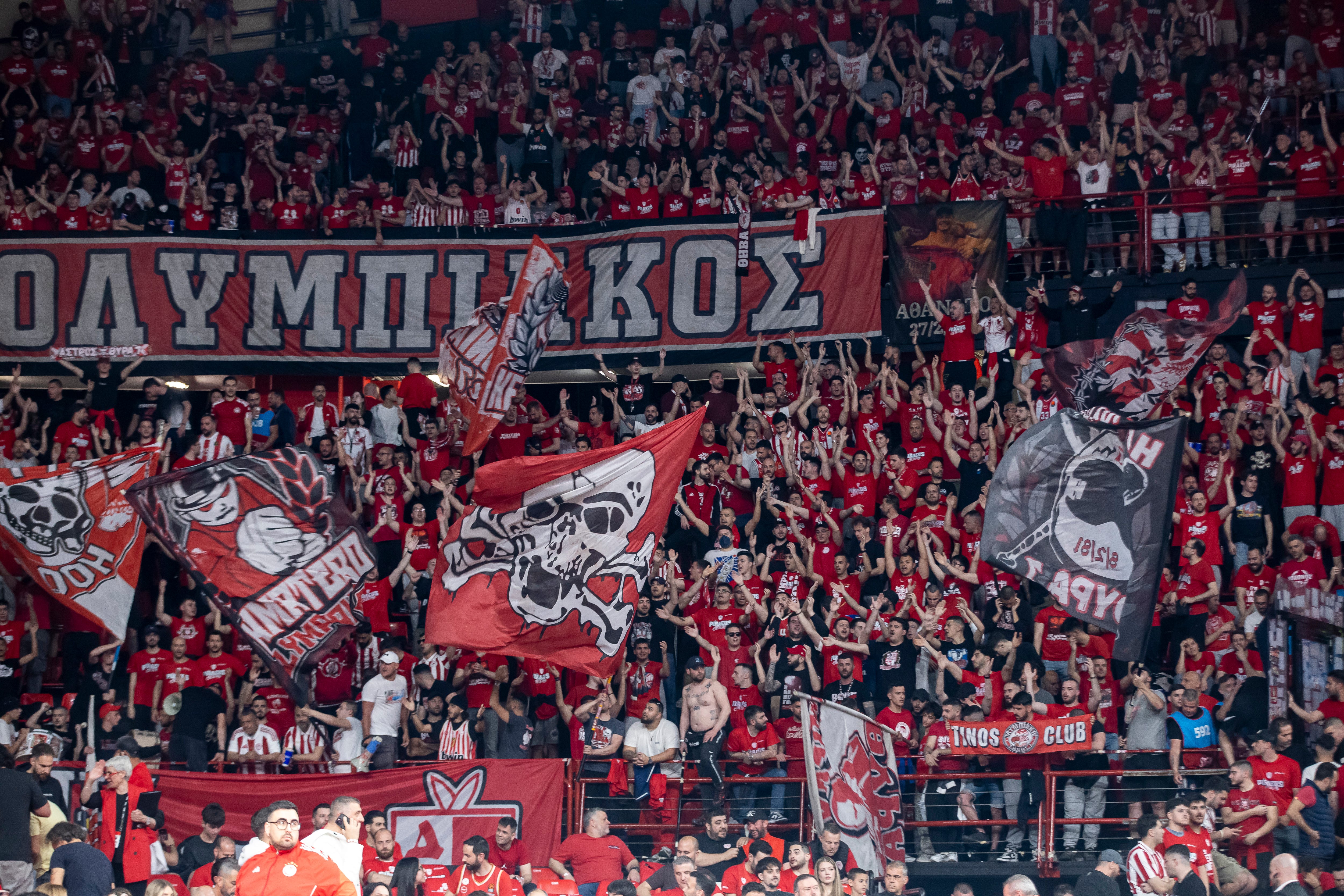
I went to Athens during a torrential downpour that happened to coincide with a taxi strike. By the time I finally made it to the arena, my shoes were completely destroyed, only to find out the game had been canceled because of problems with the roof. Then I had a new problem to solve: figuring out how to get back to my hotel in the middle of a storm with no taxis.
I went to Montenegro and couldn’t believe people were smoking inside the arena.
I learned that I don’t particularly enjoy scouting trips to small towns where the game ends late and finding transportation back to the hotel becomes its own scouting assignment.
And I learned that sometimes being cheap creates more problems than it solves.
Whenever it was an option, I preferred traveling by train instead of flying. It was usually less expensive, more convenient and gave me a chance to actually see some of the country instead of another airport. That preference changed pretty quickly after back to back high-speed train crashes in Spain in January. After that, flying suddenly didn't seem so bad.
Then there was Abu Dhabi.
I had actually saved money for the trip because I wanted to bring my family with me to the Adidas Next Generation Tournament in the UAE. Ultimately, we didn’t make the trip, and during the tournament, the escalating conflict involving the United States, Israel and Iran forced the event to be canceled.
Considering everything that unfolded in the region, that was one scouting trip I was incredibly thankful my family and I missed.
But even the inconvenient parts became part of what I loved about the experience.
The delayed flights. The trains. The taxis. The random gyms. The hotels. The languages I didn’t understand. The moments when I had absolutely no idea what was going on around me.
I loved learning how basketball operated in different places.
More importantly, I loved learning about different cultures.
There was so much I didn’t know.
I learned quickly that scouting at the NBA level wasn’t simply about having the best evaluation of a player.
Information mattered just as much.
One of the best pieces of advice I received was about understanding what the top decision makers in the front office really needed from their scouts:
“They’re going to make their own decisions on the players. They need you to gather the intel.”
That completely changed the way I thought about the job.
The film tells you what a player does.
The information can help explain why.
What is his work ethic? How does he handle adversity?
What’s his personality? What do coaches think about him?
How does he interact with teammates? What’s happening behind the scenes that might explain what we’re seeing on the floor?
I also learned how to communicate my evaluations differently.
Shorter. Much shorter.
I’ve spent years writing detailed scouting reports and explaining exactly how I arrived at my conclusions.
Inside an NBA organization, I quickly learned that decision makers don’t always have time to read a thesis.
Get to the point. What does he do? What’s the concern?
What translates? What’s the projection? What do I need to know?
And the scouts themselves made the experience better.
I was the new guy, and I was amazed by how many veteran scouts welcomed me with open arms. These were people who had spent years traveling internationally. They knew every tournament, airport, gym, hotel and basketball person imaginable.
And they helped me.
They answered questions. They gave me advice. They made introductions. They told me where to go, where to stay and occasionally where not to go.
I came into the NBA expecting to learn more about evaluating basketball players.
But I probably learned even more about people, cultures, relationships and how much information exists beyond the film.
For me, the experience was better than I anticipated.
It was one of the greatest experiences of my life.
And I’d do it all over again…..Maybe
I Learned That Chasing Your Dream Isn’t Just About You

This was probably the most important thing I learned all year.
For most of my career, when I thought about becoming an NBA scout, I thought about what I needed to do.
I needed to get better. I needed to build relationships.
I needed to be in the gyms across the world. I needed to watch more basketball.
I needed to create opportunities. I needed to get my foot in the door.
Then I finally got the opportunity and realized something I hadn’t thought enough about:
My dream wasn’t only affecting me anymore.
My wife had her own career.
She went to school, earned her master’s degree and built a professional identity completely separate from mine.
Then this opportunity came along.
And she left her job and moved to another country because of my career. She did it without hesitation. She believed in me, believed in my dream and had seen firsthand how much work I had put in over the years to reach that point. When the opportunity finally came, she was willing to make a sacrifice of her own so I could pursue it.
She loved Paris. We all did. It was an incredible experience for our family.
But I also started thinking more about what that sacrifice meant for my wife. She had her own career, her own income, her own routine and a professional identity she had worked hard to build. Now she was in another country rebuilding her life around an opportunity that was mine.
She’s my wife, but she’s still her own person with her own goals and ambitions. Suddenly, she was away from her normal support system, dependent on one income and starting over in a new country.
It made me think about what she had given up for me to chase my dream, and whether I had fully understood the weight of that sacrifice when we made the decision to move.
My three year old son had his own adjustment to make.
He’s naturally outgoing, very energetic and social.
Then we put him in a French speaking school where he didn’t know anyone and couldn’t communicate with the other kids.
At school, this incredibly outgoing kid became quiet.
Then he’d come home and talk our ears off.
Home was the place where everybody understood him.
Watching that changed something in me.
It made me think differently about ambition.
There’s a romantic version of chasing your dream where you work harder than everybody else, make sacrifices, bet on yourself and eventually get where you’ve always wanted to go.
But chasing your dream becomes much more complicated when other people have to sacrifice for it too.
And professional sports demands sacrifice.
There’s travel. There’s relocation.
There are nights away from home. There are weekends when everyone else is together and you’re sitting in a gym somewhere.
There are birthdays, dinners and ordinary moments you potentially miss because there’s another game, tournament or flight.
That led me to a question that I’m still trying to answer:
Can I be great at my job and also be a great husband, father, son and brother?
Not good, but great.
Can I give everything required to succeed in an extremely competitive industry without constantly asking the people closest to me to absorb the cost?
I don’t know if there’s a perfect answer.
But I know I’m much more conscious of the question now.
For years, so much of my professional life was about getting there.
Now I think more about what happens once you get there.
What does success look like if you’re thriving professionally but your family is constantly adjusting around your career?
How much moving is too much? How much travel is too much?
Which opportunities are actually worth uprooting everyone for?
Those weren’t questions I thought about nearly enough when I was trying to get into the NBA.
I do now.
And maybe that’s part of growing up professionally.
The goal isn’t simply to get the biggest job possible.
It’s figuring out how to build a life where your ambition and your responsibilities to the people you love can coexist.
I Had a Plan for Everything Except What Actually Happened
I wasn’t just happy to be in the NBA.
I was ambitious.
From almost the moment I got the job, I had a plan for what I wanted the next several years of my career to look like.
And when I say I had a plan, I mean I had a plan.
My goal was to spend two years as an international scout. I wanted to learn as much as possible, build relationships throughout Europe and become significantly better at evaluating players and gathering information.
The two year timeline wasn’t random.
My son was three years old when we moved to Paris, and I figured we’d spend two years in Europe and return to the United States around the time he was ready to start kindergarten.
From there, I already knew what job I wanted next.
I wanted to become the general manager of a G League team.
I wasn’t waiting until an interview came along to start thinking about what kind of GM I wanted to be. I had already started putting together a presentation outlining how I would run a G League team, what I valued and the ideas I would bring to the job.
I wanted to be ready whenever that interview came.
Then, if I could become a successful G League GM, I had already thought about what could come after that.
Maybe Director of Scouting.
Maybe Director of Pro Personnel.
I had essentially reverse engineered the career I wanted.
And I approached my year as an international scout with that same level of ambition.
I wanted to write three scouting reports per day.
Three reports a day meant roughly 90 reports per month.
Maybe I was being a volume shooter.
Maybe that was too much.
But I knew I had something incredibly valuable that I hadn’t always had while trying to break into the NBA:
Time.
Scouting is a strange profession because there can be stretches where you have a lot of it. Obviously, there are games, travel days, tournaments, calls and information to gather. But there are also mornings in hotel rooms and afternoons in different cities where nobody is telling you exactly how to spend every hour.
I didn’t want to waste those hours.
I wanted to enjoy Europe. I wanted to explore different cities and take advantage of an opportunity my family might never have again.
But I also knew why I was there.
So I watched basketball.
A lot of basketball.
My primary responsibility was international scouting, but I didn’t want to lose touch with what was happening back home. I continued tracking college players and high school prospects in the United States while studying EuroLeague veterans, international draft prospects and teenagers who were still years away from becoming draft eligible.
The one thing I hadn’t planned for was the possibility that the entire roadmap could disappear before I made it through the first step.
And then it did.
Suddenly, the question wasn’t what position would come after my second year as an international scout.
The question was what I was going to do next.
I Learned That Stability in the NBA Is Never Guaranteed
When I found out I was being let go, I was furious.
There’s no reason for me to rewrite history and pretend I immediately handled it with some incredible sense of perspective.
I didn’t.
My family had moved across the world.
My wife had left her job.
My son had adjusted to a new school, a new language and a new country.
We had built our lives around this opportunity.
Then organizational changes happened and suddenly it was over.
I was angry.
But after a few days, something clicked.
I realized I wasn’t special.
I was just another person who got fired.
Every year, thousands of coaches, scouts, executives and people behind the scenes in professional and college sports lose their jobs.
And most of them have families.
That realization helped me stop looking at what happened strictly through the lens of what happened to me.
It also made me realize just how fragile careers in professional sports can be.
Think about how crazy this business is.
A scout can spend years working his way up through an organization.
Maybe he’s hoping to eventually become a director of scouting, an assistant general manager or even a general manager.
And part of that career trajectory could ultimately be connected to whether an organization correctly evaluates a 19 year-old on draft night.
Pick the right foundational player and that player might stabilize the franchise for the next decade.
The GM stays. The front office stays. The scouts stay. The coaches stay.
Families stay in the same city.
Get it wrong?
Everything can change. A bad trade can change everything.
A rash of injuries can change everything. Ownership can change everything.
A new president can change everything.
A new general manager can walk in and understandably want his own people.
And suddenly dozens of lives are affected by decisions that most fans experience as a transaction notification on their phones.
That’s the cruelty of the business.
Not because the people making those decisions are necessarily cruel.
But because the business itself can be.
When you’re working your way up in sports, your career isn’t always determined solely by how good you are at your job.
Sometimes it’s timing. Sometimes it’s relationships.
Sometimes it’s organizational stability. Sometimes it’s whether the star player stays healthy.
Sometimes it’s whether a draft pick develops. Sometimes it’s whether the person who hired you is still there six months later.
My situation was especially unique.
I entered the organization at a very specific moment in time, and the person who hired me was gone shortly after I arrived.
So I’m also careful not to take my experience and say, “This is what working in the NBA is like.”
I don’t know that.
I know what my year in the NBA was like.
Thirty organizations operate thirty different ways.
Different owners. Different executives. Different cultures. Different expectations. And different levels of stability.
My experience was one experience.
And despite how it ended, it was an incredible one.
Maybe that’s the biggest perspective I’ve gained since being let go.
I’m thankful.
I’m thankful somebody gave me the opportunity.
I’m thankful my family was willing to take the journey with me and I’m thankful for Paris.
I’m thankful for every flight, every train, every gym and even the occasional transportation disaster.
I’m thankful for the scouts who helped me.
I’m thankful for what I learned.
And I’m even thankful for the ending because it forced me to ask questions about my career and my life that I probably wouldn’t have asked otherwise.
I don’t know whether I’ll ever work for an NBA team again.
I also don’t feel like I need to know.
If the right opportunity and the right situation presented itself someday, I’d absolutely listen.
But I’m not sitting around waiting for the NBA to call.
I’m scouting independently again. I’m writing. I’m creating. I’m expanding my coverage deeper into grassroots basketball domestically while continuing to evaluate international prospects.
I want NBA Big Board to become more than a draft publication and cover the entire prospect ecosystem, grassroots, high school, college, international basketball, NIL, the draft and everything surrounding the development of young players.
I’m doing more consulting with players and families.
I’m exploring creative and content strategy work.
And I’m increasingly interested in teaching and mentoring.
There was a younger version of me who desperately wanted someone to explain how this industry worked.
How do you become a scout? How do you learn to evaluate?
How do you build relationships? How do you get into gyms?
How do you get people to take your opinion seriously when nobody knows who you are?
I spent years figuring those things out the hard way.
Maybe part of what’s next is helping someone else figure them out a little faster.
For a long time, becoming an NBA scout felt like the destination.
Then I became one.
And I learned that it wasn’t the destination at all.
It was an incredible stop along the way.
Maybe there will be another stop in the NBA someday. Maybe there won’t.
Either way, I got to live something I had dreamed about for years.
It was better than I imagined.
It changed the way I look at my career and it changed the way I look at my family.
For one year, I got to be an NBA scout.
I’m incredibly thankful that I did.
I Learned That Getting Knocked Down Can Change the Way You Get Back Up
There’s one part of this experience that I’m still wrestling with.
I think it made me more cautious.
And I don’t know if I like that.
For most of my career, I’ve been a risk taker. Maybe even an irrational one at times. I’ve always believed that if an opportunity moved me closer to where I wanted to go, I’d take it and figure everything else out later.
That’s essentially how I built my career.
I traveled when I couldn’t afford to travel. I went to places I’d never been. I walked into gyms where I didn’t know anyone. I bet on ideas before I knew whether they’d work. I created opportunities when there weren’t any obvious ones available.
When it came to pursuing my dream of working in the NBA, fear was NEVER part of the equation.
If an NBA opportunity came, my answer would have been simple.
Yes.
I’ll figure out everything else later.
You don’t know when another opportunity is going to come, so you get up and go.
That’s who I’ve always been.
Some of the most successful people in the world are the biggest risk takers. They bet on themselves. They fail. They get knocked down. They get back up and bet on themselves again.
I’ve always seen myself as one of those people.
That’s why I hate admitting that losing my job changed some of that.
If an NBA team called me tomorrow with an opportunity, I don’t think my first thought would be, “How quickly can I get there?”
I’d have questions.
How stable is the organization? What’s the ownership situation?
How secure is the front office? Is the general manager on the hot seat?
What about the head coach? Who are the foundational players on the roster?
Is there a franchise cornerstone? How good is he?
How healthy is he? What direction is the organization heading?
A year ago, I wouldn’t have spent nearly as much time thinking about those things.
I would’ve been thinking about the opportunity.
Now I’d be thinking about the risk.
To be completely transparent, there are NBA organizations where, if I were offered the right opportunity, I’d probably feel comfortable moving my family to that city and buying a house.
There are others where I’d probably lease an apartment.
That’s not a criticism of any particular organization. It’s simply acknowledging the reality of professional sports.
I’ve always known this business was unstable.
It’s different once you’ve experienced that instability yourself.
It’s also different when you’re no longer making decisions solely for yourself.
Every risk I take now affects my wife and my son. If I move, they move. If my job disappears, their lives change too.
Maybe becoming more cautious is exactly what I’m supposed to do.
Maybe it’s not fear. Maybe it’s responsibility.
But I’d be lying if I said that explanation completely satisfies me.
Because I miss the version of myself who would simply say, “I’ll figure it out.”
I got a small glimpse of how much I’ve changed shortly after I was let go.
There was some interest from another NBA team that reached out to see if I was still living in Paris. There was never a guarantee that it would have turned into a job, and by the time they contacted me, I had already made the decision to return to Dallas.
But I’ve thought about that moment.
A year earlier, I probably would have stayed in Paris.
I might have given myself another six months. I would’ve convinced myself that another opportunity was coming. I would’ve bet on my relationships, my work and my ability to make something happen.
I would’ve figured everything else out later.
This time, I didn’t.
Instead of betting on what might happen next, I made the decision I believed provided the most stability for my family.
We went home.
I still believe that was the right decision.
But it showed me that something had changed.
And of everything that happened over the past year, that’s probably the part I’m most uncomfortable admitting.
I don’t want losing one job to make me afraid to chase the next opportunity.
I don’t want one bad ending to erase the fearlessness that helped me get there in the first place.
I’ve come too far for that.
The question is what version of me will make the next decision.
The guy who spent years fearlessly betting on himself?
Or the husband and father who now understands exactly what can happen when that bet doesn’t work out?
Maybe the answer has to be somewhere in between. Maybe growth isn’t about becoming fearless again.
Maybe it’s learning which risks are worth taking.
I still want to be ambitious. I still want to bet on myself. I still want to believe that when something doesn’t work out, I’ll get back up and find another way.
I just understand now that when I place that bet, I’m not the only person with something on the table.
I Landed on My Feet
For all the uncertainty this experience created, there’s one thing I’m incredibly thankful for.
I was able to land on my feet.
By the time I arrived back in Dallas, I already had another opportunity waiting for me.
What mattered more to me was what happened once word started getting around that I had been let go.
My phone started ringing.
People I’d built relationships with over the years reached out. Some wanted to check on me. Others wanted to know what I was going to do next. Some had ideas. Some had opportunities.
That meant a lot to me.
It reminded me that while jobs can disappear quickly in this business, relationships don’t have to.
When things didn’t go according to plan, many of those same people showed up for me.
I’m incredibly thankful for that.
I’m also thankful to have something back in my life that I didn’t realize how much I missed until I was working inside the NBA.
Creativity.
I loved scouting. I loved evaluating players. I loved gathering information. I loved the travel and almost everything that came with the job.
But there wasn’t always a lot of room for me to be creative.
For most of my career, creativity has been a huge part of who I am.
I enjoy writing, podcasting and creating content.
I like taking an idea and figuring out an interesting way to tell the story.
I missed that.
Now I get to do it again.
Whether it’s sitting behind a microphone, breaking down a prospect, creating content or writing something personal like this, I’ve rediscovered how much I enjoy having a creative outlet.
Maybe that’s another thing this experience taught me about myself.
I don’t just love scouting.
I love basketball, evaluating players, telling stories and creating.
And maybe my career doesn’t have to fit neatly into one box.
Good stuff, very insightful and even vulnerable on your end. Salute, bro!
Great read, Rafael!