
The 2026 NBA Draft Proved American Grassroots Basketball Isn't Broken
The conversation around grassroots basketball lacks nuance, and the 2026 NBA Draft is proof.

The criticism of American grassroots basketball has become impossible to ignore.
Spend enough time on social media, and you’ll see the same complaints repeated over and over again.
AAU basketball is ruining players.
Kids aren’t being taught fundamentals.
Exposure has replaced development.
All they want to do is shoot threes!
People often say the game has become more about showcasing individual talent than learning how to play within a team structure.
Meanwhile, international basketball is often presented as the model everyone else should follow.
And to be fair, there are legitimate concerns about the American grassroots ecosystem. Youth basketball is becoming more expensive every year. There are too many games, too many events, and in some cases, development can take a backseat to exposure.
But after watching the 2026 NBA Draft unfold, I couldn’t help but notice something.
Everyone seems to love this draft class.
Scouts love it. Executives love it.
Fans love it and analysts love it.
The 2026 class has been praised for its depth, versatility, skill level, and star power.
Yet very few people seem willing to acknowledge where most of these players came from.
American grassroots basketball.
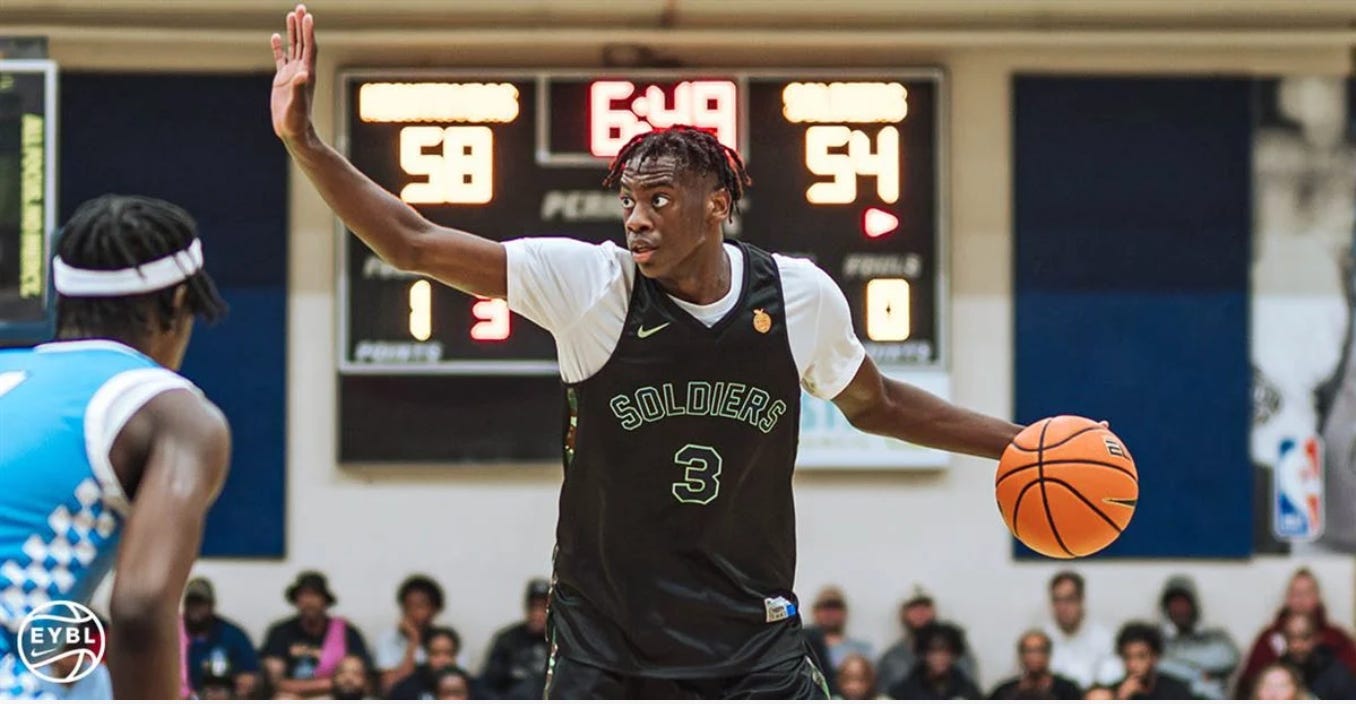
AJ Dybantsa, Cameron Boozer, Caleb Wilson, and Darius Acuff Jr. all spent years competing on the Nike EYBL circuit. Darryn Peterson and Mikel Brown Jr. developed on the Adidas circuit. Kingston Flemings was a star on the Puma Circuit. Many of the players selected in the lottery sharpened their games on the same grassroots platforms that are routinely criticized online.
If this class is as good as everyone says it is, shouldn’t the system that developed these players receive some credit?
My Journey Into International Basketball
I say this as someone who has spent the last decade studying basketball on both sides of the globe.
Ten years ago, I fell in love with the international game while living in Istanbul, Turkey during the 2016-17 season. Being around Fenerbahçe Basketball changed the way I viewed the sport and ultimately changed the trajectory of my career.
At that point, I realized there was a lane for me as a content creator and scout.
This space is competitive. Just like players, evaluators need a skill they can hang their hat on. My goal was to become the American who knew as much about international prospects as anyone while still maintaining a deep understanding of the American grassroots landscape.
Over the last decade, I’ve traveled extensively throughout Europe and beyond, scouting prospects and studying player development models in different countries.
None of this should be interpreted as criticism of international basketball.
Far from it. I love international basketball.
I love it so much that this past season, my wife, our three year old son, and I packed up our lives and moved across the Atlantic so I could pursue my dream of working as an international scout for an NBA team.
That experience only deepened my appreciation for the global game.
I spent countless hours in gyms across Europe. I sat with coaches, trainers, scouts, and executives. I studied practice habits, player development models, and organizational philosophies.
And I became fascinated by how differently the game is taught and approached from country to country.
Because even within Europe, there isn’t one “European model.”
Spanish basketball is different from Serbian basketball.
French basketball is different from Turkish basketball.
Lithuanian basketball is different from German basketball.
Every country has its own philosophy, strengths, traditions, and developmental challenges.
And every country has complaints.
Every Country Thinks Its System Is Broken
One thing I’ve learned from traveling internationally is that every country believes its own basketball system is broken.
Spend enough time in Greece and you’ll hear complaints about the Greek system. Coaches and trainers will tell you there isn’t enough emphasis on strength training, that facilities lag behind other countries, and that the pressure to win on senior teams often comes at the expense of developing high level prospects between the ages of 18 and 23.
I’ve spent the last year living in France, and it’s not uncommon to hear people criticize the French system for failing to develop enough guards and shooters or for lacking adequate infrastructure.
Go to Spain or Italy and you’ll hear a different concern: that clubs are increasingly bringing in international prospects, particularly from Africa, which some believe limits opportunities for domestic players.
Take Spain, for example.
Spain’s U17 national team is set to compete in the FIBA U17 World Cup this week, yet relatively few players on that roster developed within the youth systems of FC Barcelona or Real Madrid.
Why?
Because many of Spain’s biggest clubs increasingly fill their academies with elite international prospects from around the world.
While that strategy strengthens club basketball and raises the level of competition within those organizations, it has also sparked debate within Spain about the long term development of Spanish born players.
I’ve heard concerns from people within European basketball that if the country’s top clubs continue to rely heavily on imported talent, it could eventually impact the depth of future of some national teams.
Again, there isn’t a perfect answer.
Like everything else in player development, there are tradeoffs.
The criticism changes depending on the country.
But the criticism never disappears.
No matter where you go, people complain about youth basketball.
No system is perfect.
What Europe Does Better And What America Does Better
There are aspects of the European model that I believe the United States should absolutely consider adopting.
The age based competition structure is one example.
European youth tournaments are generally based strictly on birth year, while reclassification has become increasingly common in the United States.
Personally, I do believe reclassification has become excessive. There are simply too many 15 year old eighth graders competing in today’s landscape.
European basketball is also more structured. In countries like Spain and Serbia, you can’t simply wake up one morning and decide to start a basketball program. Coaches are generally required to obtain certifications, and there is greater oversight throughout the system.
There are lessons to be learned from that.
There is also another uncomfortable reality that rarely gets discussed publicly. While reclassification has become a major topic in the United States, some countries have long battled allegations of age fraud and inaccurate documentation.
In America, a player may be held back a grade to gain a competitive advantage. In other parts of the world, there have been instances where players’ ages and birth records have come under scrutiny, creating an entirely different set of competitive and developmental issues.
Again, no system is perfect.
Why The American Grassroots System Deserves More Credit
As I spent more time scouting internationally, I felt that my understanding of the American grassroots landscape provided a valuable frame of reference while scouting internationally.
Whenever I watched a young prospect in Europe, I constantly found myself asking the same questions:
Could this player survive on a good EYBL team?
Could he play on the Adidas 3SSB circuit?
Would he hold his own in the SEC or the Big 12?
Those questions became my frame of reference.
Professional basketball in Europe is incredible. The atmospheres are intense, passionate, and in some cases borderline hostile.
Youth basketball is different.
Many youth games are played in front of small crowds or nearly empty gyms.
The environment simply doesn’t replicate the pressure, intensity, and athleticism that elite American prospects experience on a regular basis.
And while American basketball receives criticism for rankings, media attention, and exposure culture, I think there are benefits that often go overlooked.
American players grow up in an incredibly competitive ecosystem.
If you’re a highly ranked player, you’re constantly trying to maintain your status.
If you’re underrated, you’re trying to prove the rankings wrong.
That pressure can be exhausting, but it also creates an environment where players are constantly challenged.
While rankings and exposure culture receive plenty of criticism, I believe they also help foster an intense competitive environment that is often overlooked.
Every weekend on the EYBL or Adidas circuit, you’re likely facing another elite prospect, often someone ranked ahead of you.
Competition is relentless.
In Europe, many of the top prospects eventually concentrate on powerhouse clubs like Real Madrid and FC Barcelona.
Their practices may be intense, but evaluating games can sometimes be difficult because those teams often win by 40, 50, or even 60 points.
As a scout, that creates challenges.
How much can you really learn about a prospect when his team is overwhelmingly more talented than the opposition?
Of course, American basketball has its own issues.
Players often feel obligated to compete year round because missing an event can damage perception. A poor weekend can result in harsh criticism, and quite frankly, I think we are sometimes far too critical of 15, 16, and 17 year old kids.
The Anthony Edwards Double Standard
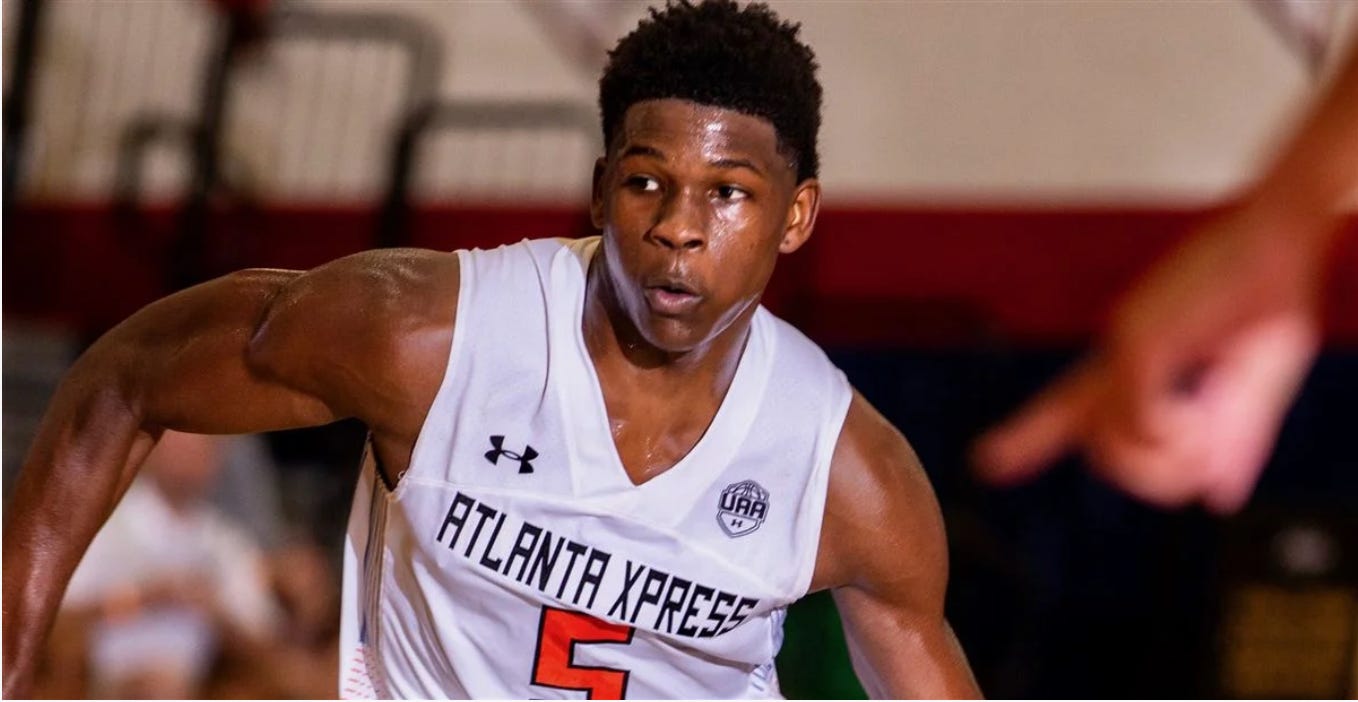
My brother James and I have had this conversation countless times over the years, and he once made a point that has stuck with me.
He said that Anthony Edwards, one of the best players in the world, will probably never receive enough credit for how fundamentally sound he actually is.
When people talk about Edwards, they talk about the athleticism.
And understandably so.
His athleticism is loud. It jumps off the screen. It’s impossible to ignore.
But rarely do you hear discussions about his footwork, his balance, his ability to change speeds, or the countless hours of skill development that shaped him into the player he is today.
It’s almost as if his natural gifts overshadow the work.
Nobody talks about the coaches, trainers, and support system that helped develop those skills.
Yet when a similarly gifted American prospect lacks polish or fundamentals, the criticism is immediate.
The blame often falls on AAU basketball, grassroots coaches, or the American development system as a whole.
That double standard has always fascinated me.
Because if we’re going to credit international development systems for producing fundamentally sound players, shouldn’t we also acknowledge that the American grassroots system helped develop players like Edwards, LeBron James, Kevin Durant, Shai Gilgeous-Alexander, Jayson Tatum, Kyrie Irving, Jalen Brunson and countless others?
In some cases, I believe the current discourse has gone too far.
There seems to be an assumption that international prospects inherently possess superior fundamentals simply because they developed overseas. I believe that perception has, at times, inflated everything from NIL valuations to draft stock.
The reality is much more nuanced.
There are fundamentally sound players everywhere.
There are raw players everywhere.
And there are elite developers everywhere.
Geography alone doesn’t determine whether a player knows how to play.
Why Bashing Grassroots Basketball Has Become Low Hanging Fruit
There is another aspect of American grassroots basketball that I don’t believe gets discussed nearly enough.
In today’s media environment, if you have a podcast, YouTube channel, or social media platform and you’re looking for engagement, one of the easiest ways to generate clicks is to bash American grassroots basketball.
It’s low hanging fruit.
Criticize AAU.
Complain about the style of play.
Blame social media.
And to be fair, some of those criticisms are warranted.
But I also think some of the criticism lacks perspective.
As someone who has spent years covering both grassroots and international basketball, I understand why criticizing AAU resonates with audiences.
But I also think it has become an easy talking point.
It’s simple.
It’s familiar.
And quite frankly, it’s low hanging fruit.
Every generation tends to believe that the previous generation played the game the “right way.”
A coach, scout, or fan in his 50s may dislike how today’s teenagers play basketball. But when that same person was a teenager, there is a good chance someone from an older generation felt exactly the same way about him.
That’s just the natural cycle of sports.
The NBA Players Who Continue To Pour Into Grassroots Basketball
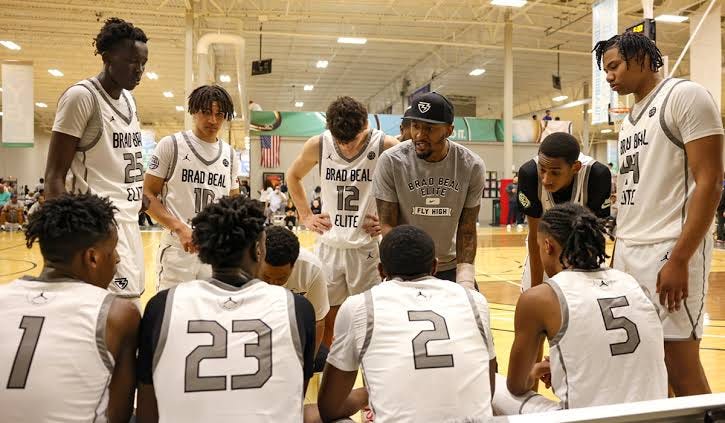
In my humble opinion, more attention should be paid to the number of NBA players who are pouring their time, money, and knowledge back into grassroots basketball.
I’ve attended Nike EYBL events and watched Paul George sitting courtside supporting his PG Elite program.
I’ve seen Bradley Beal on the sidelines with Bradley Beal Elite.
I’ve watched Matt Barnes, Jamal Crawford, Chris Paul, Jermaine O’Neal, TJ Ford and countless others invest in youth basketball because they genuinely want to give back.
I saw the impact of that access firsthand.
Eleven years ago, I worked as the videographer for Mo Williams Academy, a grassroots program founded and funded by former NBA All-Star Mo Williams.
When Mo worked out at 6 a.m. to prepare for the season, the players in his program were invited to join him.
Those kids had access.
They were doing the same drills as an NBA veteran. They were learning habits, routines, and professionalism directly from someone who had already achieved what they were chasing.
I remember one tournament in Las Vegas when the team stayed at the Wynn Hotel. The front desk mistakenly handed me the bill because I just happened to be the last adult she saw, and the total was more money than I made in an entire year.
Considering the Wynn in July isn't cheap for a normal vacation, you can imagine what it costs to house three teams, coaches, parents, and a videographer.
I quickly explained that my name was not Maurice Williams and that I was definitely not responsible for that bill.
But what stayed with me was this:
Mo had five sons of his own.
Like most NBA players, he spent much of the season away from his family.
Yet every summer, instead of taking time entirely for himself, he chose to spend countless hours mentoring dozens of teenage boys in Dallas, a city that wasn’t even his hometown.
That level of commitment deserves recognition.
Across the country, current and former NBA players are investing their time, money, and energy into grassroots basketball.
As a result, today’s young players have unprecedented access to NBA knowledge, mentorship, and experience.
In some cases, that access has come full circle.
I know for a fact there are NBA players who have eventually shared the court with players they once coached or mentored in grassroots basketball.
Just off the top of my head, Memphis Grizzlies forward GG Jackson played for Chris Paul’s Team CP3 program before eventually competing against Paul in the NBA.
Bradley Beal has faced Brandon Miller, who came through Bradley Beal Elite.
Thad Young’s Team Thad program has produced a long list of NBA players, including OG Anunoby, who has gone on to compete against Young at the highest level.
Think about that for a second.
How many generations before this one had the opportunity to not only learn directly from NBA players, but eventually compete against the very same people who once coached, mentored, and invested in them as teenagers?
That’s powerful.
Those relationships provide young players with something that statistics, rankings, and social media exposure cannot: firsthand knowledge, guidance, and mentorship from someone who has already navigated the path from grassroots basketball to the NBA.
I don’t think that’s discussed nearly enough.
And I believe it’s one of the reasons American grassroots basketball remains so strong despite all of the criticism.
The Value of Travel Basketball
Travel basketball receives plenty of criticism, but very few people talk about the opportunities it creates.
Basketball has allowed countless young players to leave their neighborhoods, travel across the country, and in some cases, see the world.
Over the last month alone, I attended the Adidas Next Generation EuroLeague Finals in Athens, Greece and Adidas EuroCamp in Treviso, Italy. At both events, I watched American players gain international exposure and experience cultures they may never have encountered without basketball.
Travel broadens perspectives.
It exposes young people to different cultures, different environments, and different ways of thinking.
In my opinion, travel is one of the greatest educators in the world.
Unfortunately, those stories rarely make headlines.
It’s much easier to focus on the negatives.
But there is far more good happening in grassroots basketball than people realize.
The Bottom Line
American basketball could benefit from some of Europe’s structure.
European basketball could benefit from some of America’s competitive environment.
The answer, in my opinion, isn’t choosing one system over the other.
It’s learning from both.
American grassroots basketball deserves criticism in some areas.
But it also deserves credit.
And if we’re going to celebrate the 2026 NBA Draft class as one of the strongest in recent memory (and we should) then we also need to acknowledge the people who helped shape it.
Because AJ Dybantsa, Cameron Boozer, Darryn Peterson, Caleb Wilson, Mikel Brown Jr., and the rest of this talented class didn’t develop in a vacuum.
Behind every first round pick is a story.
There are parents who spent thousands of hours driving across the country, sacrificing weekends, vacations, and family time to support their children’s dreams.
There are trainers who opened gyms before sunrise and stayed long after everyone else went home.
There are grassroots coaches and high school coaches who taught fundamentals, built confidence, and challenged players to become more than just talented athletes.
There are program directors who invested their time, money, and energy into creating opportunities for young players to compete, travel, and chase goals that once seemed impossible.
Those people rarely hear their names called on draft night.
They don’t walk across the stage.
They don’t put on the hat.
They don’t sign the contracts.
But make no mistake about it: they played a role in every name announced by Commissioner Adam Silver.
American grassroots basketball deserves criticism in some areas.
But it also deserves credit.
And if the 2026 NBA Draft proved anything, it’s that despite all of the criticism, the American grassroots system continues to produce elite talent at an incredibly high level.
The system isn’t broken.
It’s evolving.
And the coaches, trainers, parents, mentors, and program directors who continue to pour into the next generation deserve far more credit than they receive.
🐐 talk brother!!!!💪🏾💯