
Summer League Reality Check
I Compared Every Lottery Pick's Summer League Performance to My Pre-Draft Scouting Report.

Every July, the NBA world seems to swing from one extreme to the other. One rookie scores 30 points and suddenly he’s a future All-Star. Another lottery pick struggles through a few games, and questions about whether he was picked too high begin to surface. The truth is usually somewhere in the middle.
I also understand that Summer League isn’t played under ideal circumstances. For many lottery picks, their final college game was three or four months ago. The pre-draft process is filled with individual workouts, shooting sessions, interviews, strength training, and travel, but very little live five on five basketball. No matter how hard a player trains, nothing truly replicates the speed, timing, physicality, and decision making that comes with real game action. It’s not uncommon to see players come up short on jumpers, struggle to find their rhythm, or look rusty during their first few games back. The transition to the NBA three point line can also play a role, especially for players who relied heavily on jump shooting in college.
That said, it’s human nature to watch a player struggle from three and wonder if there’s more to it than rust. Is it simply a matter of getting their legs back under them? Is it an adjustment to NBA range? Or is it reinforcing a concern that already existed before draft night?
While shooting percentages often dominate the conversation, they’re not always what I find most interesting. I’m paying closer attention to how these players adjust to NBA athleticism, how quickly they process the game, whether they embrace a new role, how they defend, compete, and respond when things aren’t going well. Those traits tend to be much more predictive than whether a few jump shots happen to fall in July.
So instead of reacting to box scores, I went back to my pre-draft scouting reports on all 14 lottery picks. For each player, I asked the same question: Did Summer League confirm what I already believed, challenge my evaluation, or reinforce one of my biggest concerns?
Let’s start with the No. 1 pick.
AJ Dybantsa - Washington Wizards
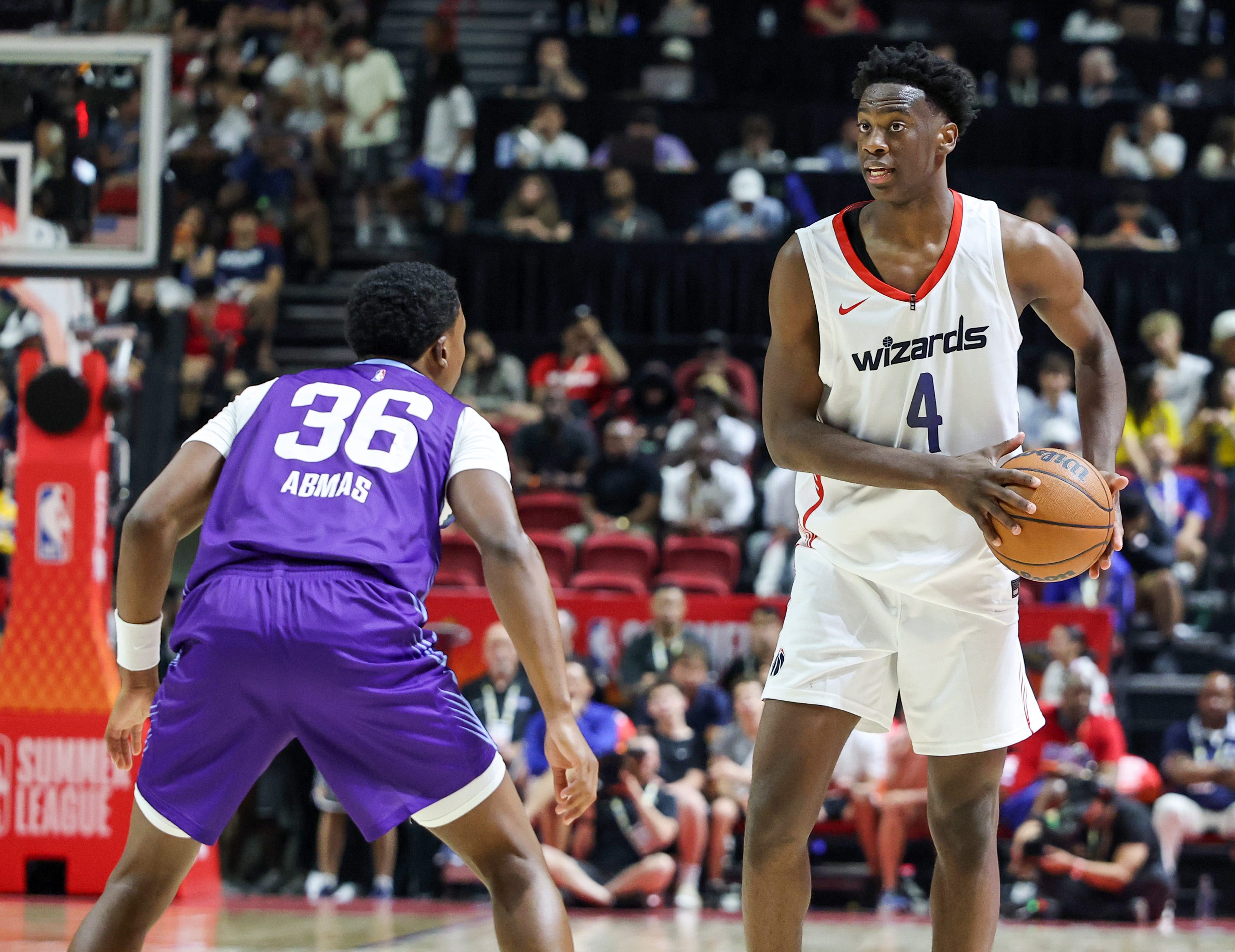
Summer League Snapshot
25.0 PPG | 7.0 RPG | 2.0 APG | 2.5 SPG | 1.5 BPG | 39.4% FG | 9.1% 3PT (1-11)
Pre-Draft Evaluation
I viewed Dybantsa as the No. 1 prospect in the class because of his combination of size, athleticism, rim pressure, and shot making ability. I believed he had the tools to become a 25 point per game scorer in the NBA and even thought he had the talent to average 20 points as a rookie. My biggest concerns centered around his shooting off the catch, defensive engagement, tendency to rely too heavily on isolation basketball, and whether he would continue to overpower defenders against NBA athletes.
What Summer League Showed Me
The production was exactly what I expected. Dybantsa averaged 25.0 points in two Summer League games and consistently put pressure on the rim. His athleticism, ability to create downhill, and knack for drawing fouls immediately translated against NBA level competition. Those were already among the biggest strengths in my pre-draft evaluation.
Where Summer League became more interesting was the shooting. Despite averaging 25 points, he shot just 39.4% from the field and 1-11 from three, with his lone make coming on a pull up in transition. More concerning, he missed every catch & shoot three he attempted. That reinforced one of the biggest questions I had entering the draft.
The defensive numbers also stood out. After concerns about his defensive engagement and relatively low block and steal rates at BYU, Dybantsa averaged 2.5 steals and 1.5 blocks, showing far more activity on that end of the floor than I consistently saw in college. It’s a small sample, but the effort level was encouraging.
Confirmed or Challenged?
Confirmed
Elite athlete who consistently gets to the rack.
Excellent at drawing fouls and generating efficient offense inside the arc.
Offensive upside remains as high as anyone in the class.
Challenged
His defensive activity exceeded my expectations.
The steal and block production suggests he may have more defensive upside than I initially projected if he maintains that level of engagement.
Reinforced Concerns
Shooting off the catch.
Perimeter efficiency.
Defenses may initially be comfortable helping off him until he proves he can consistently knock down open threes, particularly playing alongside Trae Young.
Verdict
Worth Monitoring
My overall evaluation hasn’t changed. If anything, Summer League reinforced why I viewed Dybantsa as the top prospect in the draft. The rim pressure, athleticism, and scoring instincts all translated immediately. The biggest swing skill remains his perimeter shooting. Trae Young will create the opportunities. Whether Dybantsa turns those opportunities into efficient offense could be the biggest factor in his rookie season.
