

I came to Istanbul for one reason: to get an early look at the prospects who are likely to dominate conversations leading up to the 2028 NBA Draft.
The FIBA U17 World Cup has become one of the premier scouting events on the basketball calendar because it offers one of the earliest opportunities to evaluate many of the world’s top young prospects competing against one another on the international stage. While there were plenty of intriguing individual performances throughout the week, one storyline overshadowed everything else.
Team USA was simply on another level.
There has been plenty of conversation in recent years about the rest of the world catching up to Team USA, and in many ways, that discussion is fair at the senior level.
But at the U17 level, this tournament was a reminder that the United States still has a massive talent advantage.
Team USA didn’t just win. It dominated.
The Americans won by an average margin of 46.5 points, extending their reign on top while capturing an eighth consecutive U17 World Cup title.
So while the world may be gaining ground in certain areas, this tournament was a clear reminder that at the youth level, Team USA remains in a class of its own.
More than anything, one thing became abundantly clear throughout the week.
No team could match Team USA’s combination of size, athleticism, depth, and relentless intensity.
The Americans overwhelmed opponents with wave after wave of NBA caliber talent, turning games into track meets while dominating the glass, forcing turnovers, and finishing above the rim. Even when opponents had a standout individual performance, they simply didn’t have enough firepower or depth to keep pace for 40 minutes.
That was the biggest difference throughout the tournament. Team USA wasn’t just more talented. It was bigger, faster, deeper, and more physical than every opponent it faced.
As if the blowout victories weren't enough, Team USA rewrote the record book by making a tournament-record 77 three pointers.
The Americans extended their all-time record to 58-0 and continues to set the standard for youth basketball across the globe.
The United States opened the tournament with a convincing 115-84 victory over France in what many believed would be one of the better matchups of the group stage. From there, the Americans overwhelmed Japan 128-66 before defeating Italy 131-80. The next rounds offered little resistance as Team USA rolled past Cameroon 141-85, Puerto Rico 149-82, Australia 114-85, and finally Serbia 107-81 in the championship game.
Ironically, the championship game was Team USA’s closest contest of the entire tournament.
Serbia needed a historic performance from Nikola Kusturica just to keep the final margin under 30 points. Kusturica finished with 37 points, setting a new record for the most points ever scored in a FIBA U17 World Cup championship game. Even with his brilliant effort, Serbia still became the only team in the tournament to finish within 20 points of Team USA.
Joaquim Boumtje Boumtje capped off a dominant tournament by recording 20 points, 15 rebounds, and three blocks in the championship game. CJ Rosser added 23 points, while Beckham Black orchestrated the offense with 12 points and 10 assists to go along with three steals.
Boumtje Boumtje was named the tournament’s Most Valuable Player after averaging 19.6 points, 10.9 rebounds, and 2.1 blocks per game. He also established a new tournament record with 76 total rebounds, further cementing himself as one of the biggest winners from the event.
As dominant as Team USA was, the tournament also provided an invaluable early glimpse at the next generation of NBA talent.
Here are my thoughts on Team USA’s top prospects after a week of scouting in Istanbul.
Joaquim Boumtje Boumtje
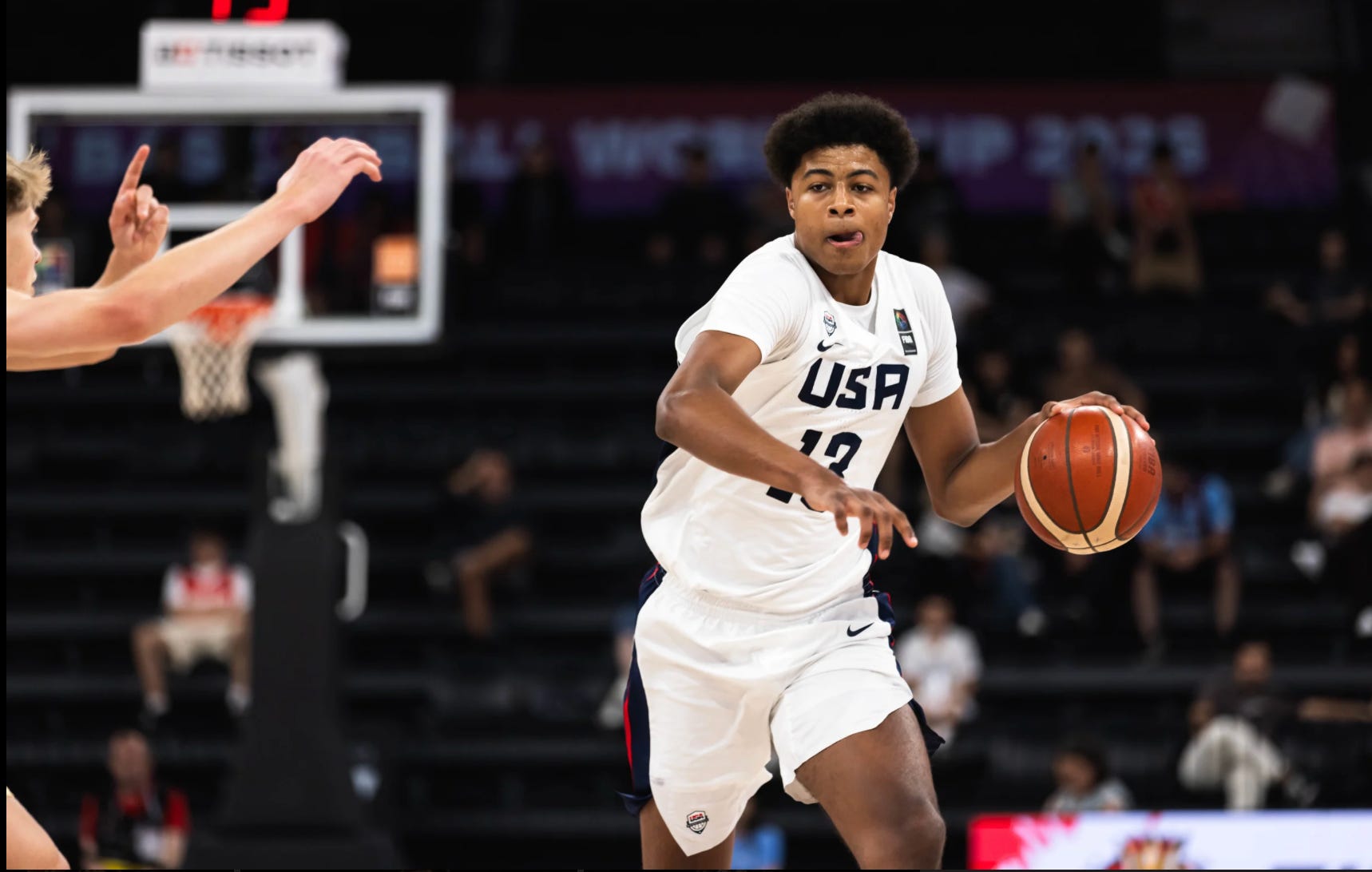
I’ll admit it: Joaquim Boumtje Boumtje showed me something in this tournament.
I’ve never doubted his talent or skill set. At 6’11” with size, strength and shooting range, the tools have always been obvious. My biggest question was whether he could consistently dominate games the way his talent suggested he should.
Playing for FC Barcelona’s youth team, that was sometimes difficult to evaluate. He played on a loaded roster that could win most games whether he scored 20 points or five. Because of that, I hadn’t always seen him impose his will on games for long stretches.
That changed at the FIBA U17 World Cup.
Boumtje Boumtje didn’t just produce. He crushed his opponents spirits.
He averaged 19.6 points and 10.9 rebounds on a ridiculous 59/53/88 shooting splits.
But the shooting wasn’t what impressed me most.
What stood out was the way Boumtje Boumtje imposed his will physically. He bullied opponents. He played with an edge and a level of nastiness that I hadn’t always seen from him. There were moments when he put the ball on the floor, attacked the rim, finished through contact, rebounded outside of his area, and made opponents look like they wanted no part of him.
He was simply too big, too strong, and too dominant.
His work on the glass was just as impressive. Boumtje Boumtje finished the tournament with three games of at least 15 rebounds, despite playing more than 25 minutes only once. Even if you took away the scoring and the shooting, he still controlled games with his rebounding, physicality, and presence.
That’s what I loved most.
He didn’t settle for being a skilled big who floated around the perimeter. He used his size and strength to his advantage. He punished smaller defenders, owned the glass, and played bully ball.
I’m convinced now.
It took me a little while, but I’m convinced.
Boumtje Boumtje has put himself in excellent position to be viewed as the early favorite for the No. 1 pick in the 2028 NBA Draft.
He now heads to Durham to begin what is expected to be a two year stint at Duke, where he’ll join another deep and talented roster. And that is still the one remaining question I have.
I’d still love to see Boumtje Boumtje as the consistent alpha on a team that isn’t loaded with talent. At Barcelona, he played alongside Nikola Kusturica and North Carolina commit Sayon Keita. This Team USA roster was stacked. Now, Duke will be loaded as well.
We may not get to see him carry a less talented team before he becomes a lottery pick.
But after what he showed in Istanbul, I feel a lot more comfortable betting on the talent, the physicality, and the mentality.
Beckham Black
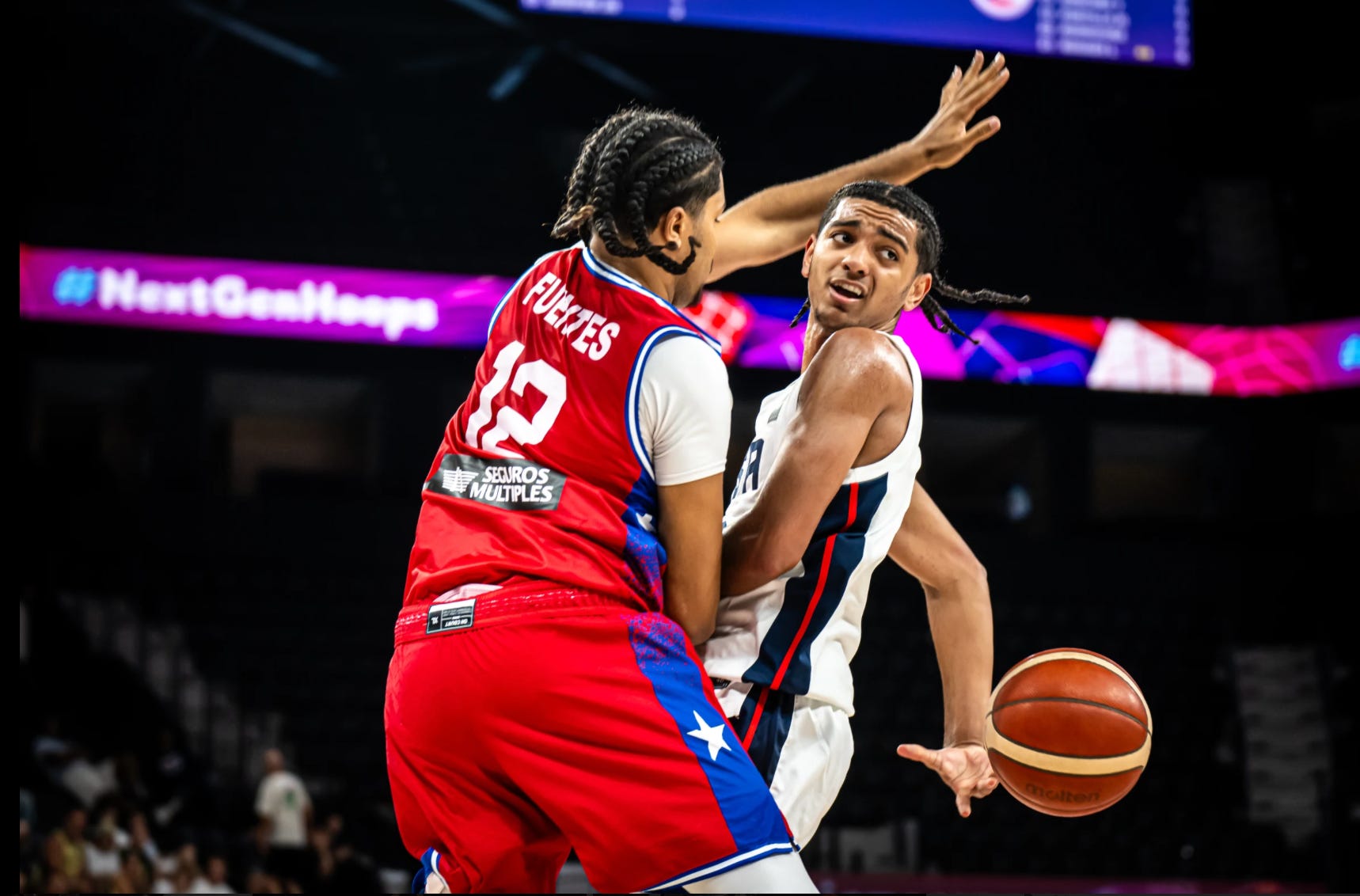
Joining Boumtje Boumtje on the FIBA U17 World Cup All-Star Five was Beckham Black, and after watching him throughout the tournament, it was an easy choice.
Black entered the event as a consensus top three prospect in the Class of 2027, and depending on which recruiting service you follow, he’s widely regarded as the top point guard in the country.
He did nothing in Istanbul to change that perception.
If anything, he strengthened his case.
Black averaged 12.3 points and 8.3 assists per game, but the numbers only tell part of the story. What impressed me most was his poise, decision making, and ability to control the game.
He consistently made the right read.
He manipulated defenses, delivered pinpoint live dribble passes, and played with the patience and pace of a veteran floor general. Even more impressive, he averaged 8.3 assists while committing just 1.3 turnovers per game, an outstanding assist-to-turnover ratio on any level.
Black was also efficient as a scorer, shooting 52 percent from the field and 39 percent from three on 28 attempts.
He showed he could score whenever Team USA needed him to.
In the opening game against France, Black exploded for 23 points on 9-14 shooting while knocking down five three-pointers. He followed that performance with 19 points and 10 assists against Japan on an efficient 7-11 shooting night.
As Team USA continued blowing teams out, his scoring opportunities naturally decreased. He finished with three games in single figures, but that wasn’t because he disappeared. It was because he shifted into distributor mode. He recorded three games with at least 10 assists, constantly creating easy scoring opportunities for teammates.
His chemistry with high school teammate CJ Rosser was especially noticeable throughout the tournament, and Black showed the qualities every coach wants in a lead guard. He made the players around him better while still demonstrating the ability to take over offensively when necessary.
Defensively, he was just as impactful.
Black averaged three steals per game and was a disruptive presence at the point of attack. He recorded five steals against Australia and capped off the tournament with another strong defensive effort in the championship game against Serbia, finishing with a double double (12 points and 10 assists) while adding three steals.
For years, Beckham was known as Anthony Black’s younger brother.
After this tournament, I think it’s safe to say he has established his own identity.
He’s simply Beckham Black, and in my opinion, the best point guard in the Class of 2027.
CJ Rosser
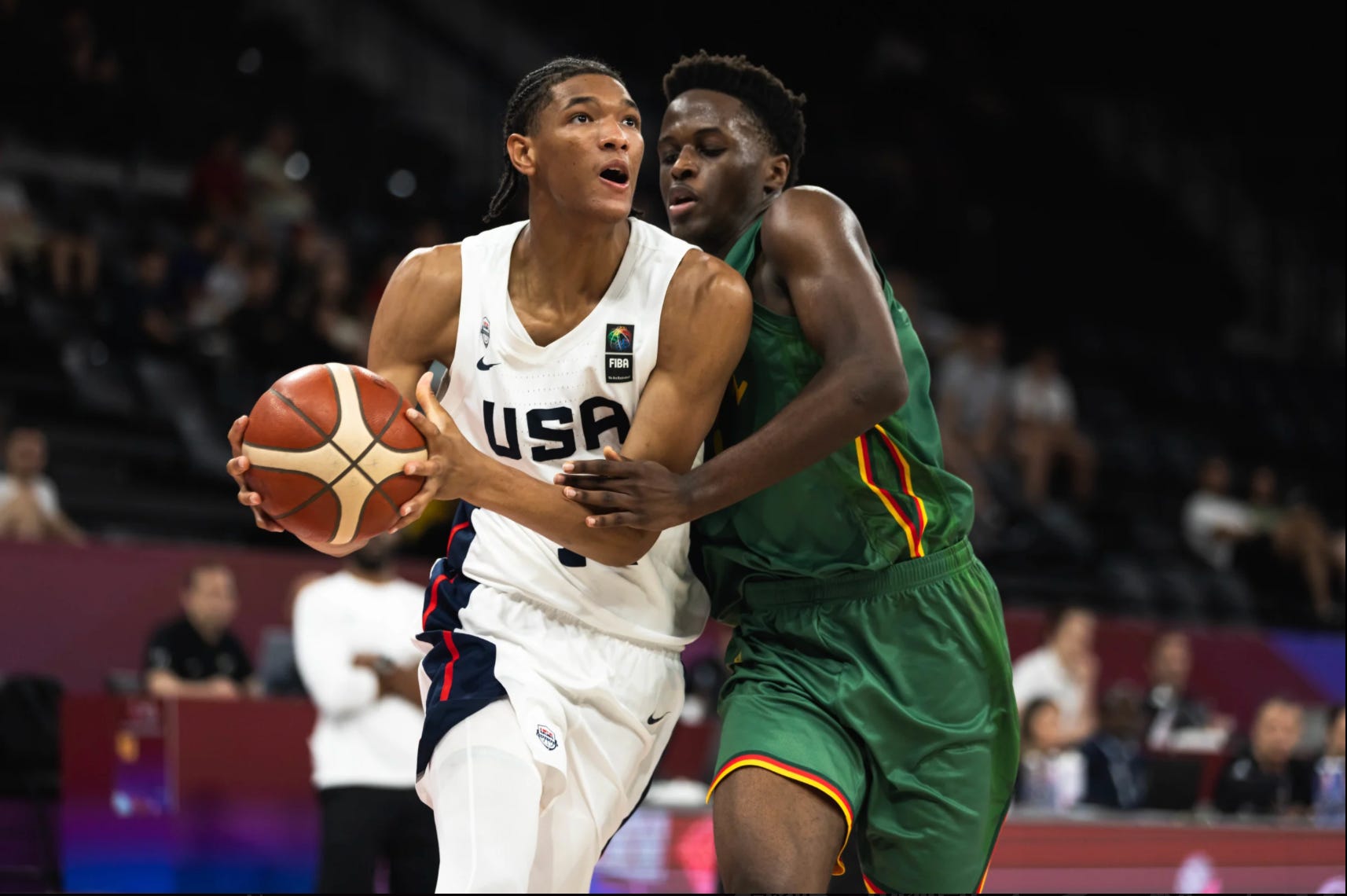
Black’s teammate at Southeastern Prep, CJ Rosser, also turned in an strong performance and reinforced why he is widely viewed as one of the top five prospects in the Class of 2027.
At 6’10”, Rosser possesses ideal NBA positional size, but what separates him is his versatility and ability to impact the game on both ends of the floor.
He finished second on Team USA in scoring, averaging 16.4 points per game while adding 3.7 rebounds and 1.7 assists. He also posted shooting splits of 51 percent from the field, 36 percent from three, and 74 percent from the free throw line.
Naturally, when you’re a thin 6’10” wing who can handle the ball and has shooting upside, the Kevin Durant comparisons are going to follow.
Personally, I think those comparisons are unfair.
While Rosser is certainly capable of making perimeter shots, I still view his jump shot as a work in progress. He’s a respectable shooter with upside, but I wouldn’t classify him as a knockdown shooter just yet.
What I think is often overlooked is his defense.
Rosser has the physical tools every NBA team covets. He’s long, agile, moves his feet exceptionally well for his size, and has the versatility to defend multiple positions. He’s also an instinctive weak side rim protector, averaging one block per game during the tournament.
His best defensive basketball came late in the event.
Over Team USA’s final two games, Rosser recorded five blocked shots while frequently drawing the assignment of defending the opposing team’s best player. He embraced the challenge and consistently made life difficult with his length, mobility, and defensive instincts.
After talking with several NBA scouts in attendance, one theme kept coming up.
They love his upside.
His defensive profile, length, athleticism, and physical tools give him an extremely high ceiling, and I actually think his defense is ahead of his offense at this stage of his development.
That’s one of the reasons my NBA comparison for Rosser is Jaden McDaniels.
McDaniels entered college and the NBA with a reputation as a gifted offensive prospect and drew plenty of Durant comparisons because of his frame and skill set. While those comparisons ultimately proved unrealistic, McDaniels has developed into one of the NBA’s premier perimeter defenders. As his defense became his calling card, his offensive game gradually caught up, allowing him to become a valuable two-way player.
I could see Rosser following a similar path.
AJ Willams
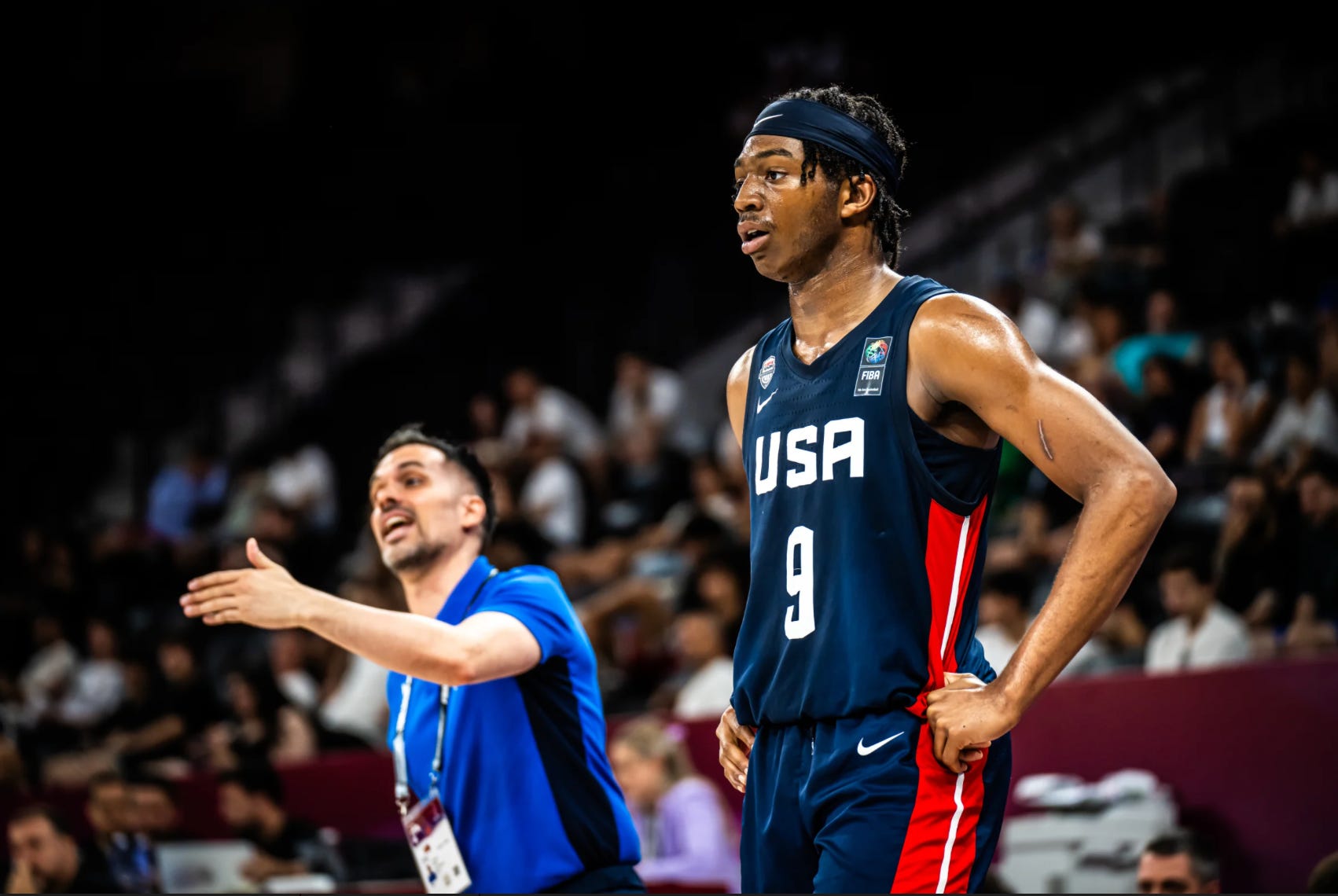
Another player who really stood out to me was AJ Williams.
Williams finished third on Team USA in scoring, averaging 14 points per game while adding 6.6 rebounds per contest. He also averaged 1.8 stocks per game, combining steals and blocks to make an impact on the defensive end.
What makes those numbers even more impressive is that he accomplished all of it while averaging just under 19 minutes per game.
Whenever Williams checked into the game, he provided an instant impact.
His best performance came against Japan (which came on his birthday) when he scored 25 points on 7-10 shooting. He knocked down five of his six three point attempts, grabbed seven rebounds, and got to the free throw line six times, all in just 15 minutes of action.
It was a reminder of just how quickly he can fill up a box score.
Throughout the tournament, Williams showcased a complete offensive package. He finished through contact at the rim, knocked down perimeter jumpers, scored off the bounce, and consistently found ways to put pressure on opposing defenses.
He finished the tournament shooting 42 percent from three on 33 attempts while averaging three free throw attempts per game and converting 87 percent of his foul shots.
What really caught my attention, however, was his overall versatility.
Williams has a strong, physical frame, rebounds well for his position, and impacts the game defensively with his length, athleticism, and activity level. He doesn’t need the offense to be built around him to influence winning.
That’s one of the reasons I believe he has one of the highest ceilings in the high school class of 2028.
I also couldn’t help but wonder what his numbers might have looked like with a larger role. Averaging 14 points in fewer than 19 minutes per game speaks to just how productive and efficient he was throughout the tournament.
This was my first opportunity to evaluate Williams in person after watching him on film, and I came away extremely impressed.
NaVarro Bowman Jr.
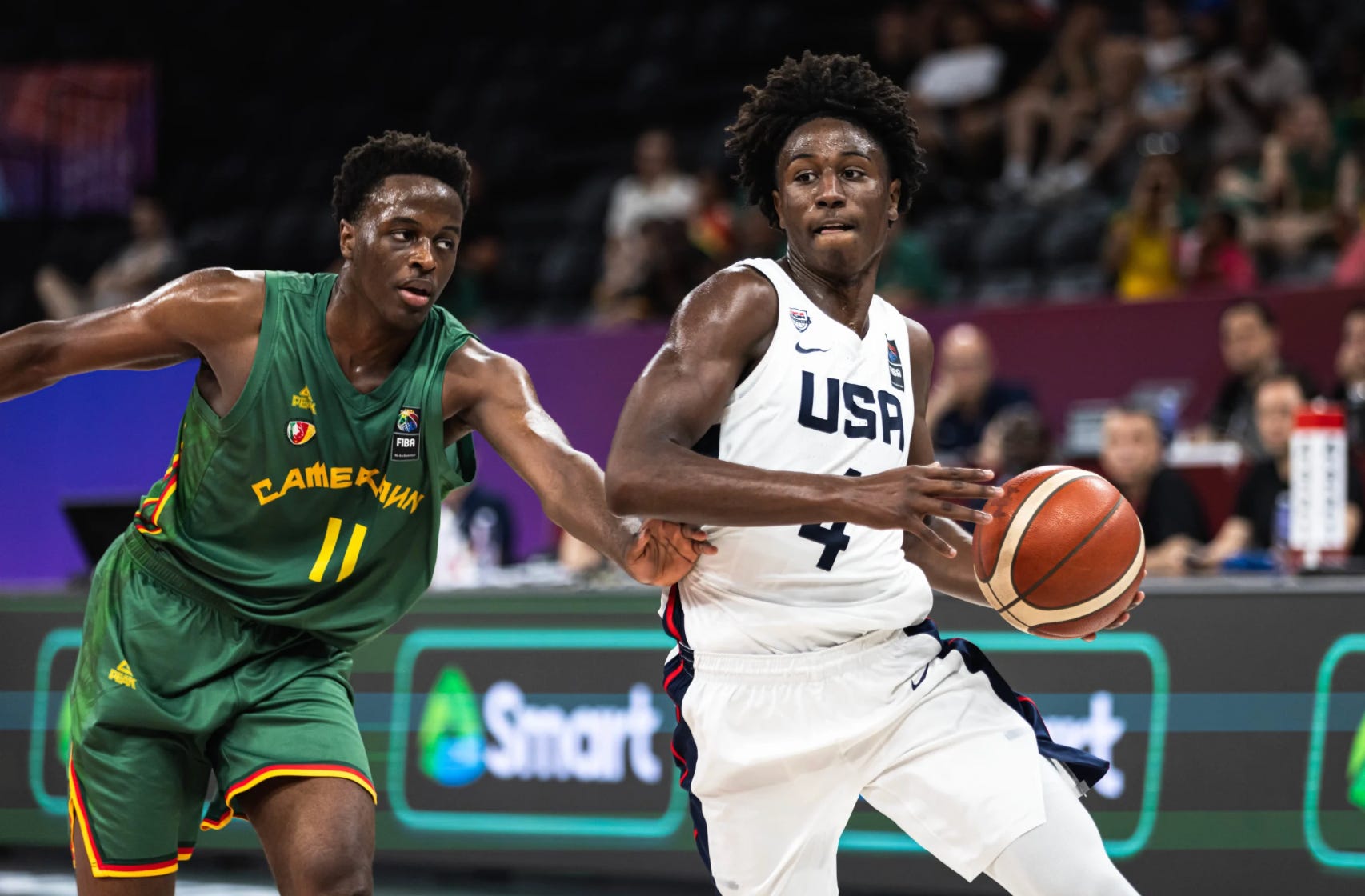
NaVarro Bowman Jr. was one of my favorite players from the tournament.
The numbers aren’t necessarily going to jump off the page. Bowman averaged 11.9 points, 3.6 assists, and 2.7 rebounds in just 18 minutes per game. But anyone who watched Team USA throughout the tournament understands that his impact went far beyond the box score.
Whenever Bowman checked into the game, he changed it.
He brought relentless energy, defensive intensity, athleticism, and pace. There was never a noticeable drop off when Team USA went to its bench because Bowman consistently raised the intensity level.
He was the perfect change of pace guard off the bench.
Bowman shot a blistering 71 percent on two point attempts, and one of the reasons for his efficiency was his ability to consistently get two feet in the paint. He put constant pressure on the defense, attacked the rim, and either finished through contact or created opportunities for his teammates.
Defensively, he was an absolute pest.
Bowman picked up opposing guards full court, applied relentless ball pressure, and played with a physical edge that made life miserable for whoever was bringing the ball up the floor.
He also produced one of the top dunksof the tournament.
His baseline dunk in the championship game against Serbia was one of those plays that made everyone in the gym stop and react. I already knew he was explosive. I knew he was a very good athlete.
I just didn’t realize he could get up like that.
Bowman is another member of Team USA who comes from an accomplished athletic family. His father, Navarro Bowman, was one of the NFL’s top linebackers during his career, and you can definitely see that influence in the way he approaches the defensive end of the floor.
He’s physical, fearless, aggressive, and competes with an edge on every possession.
Cayden Daughtry
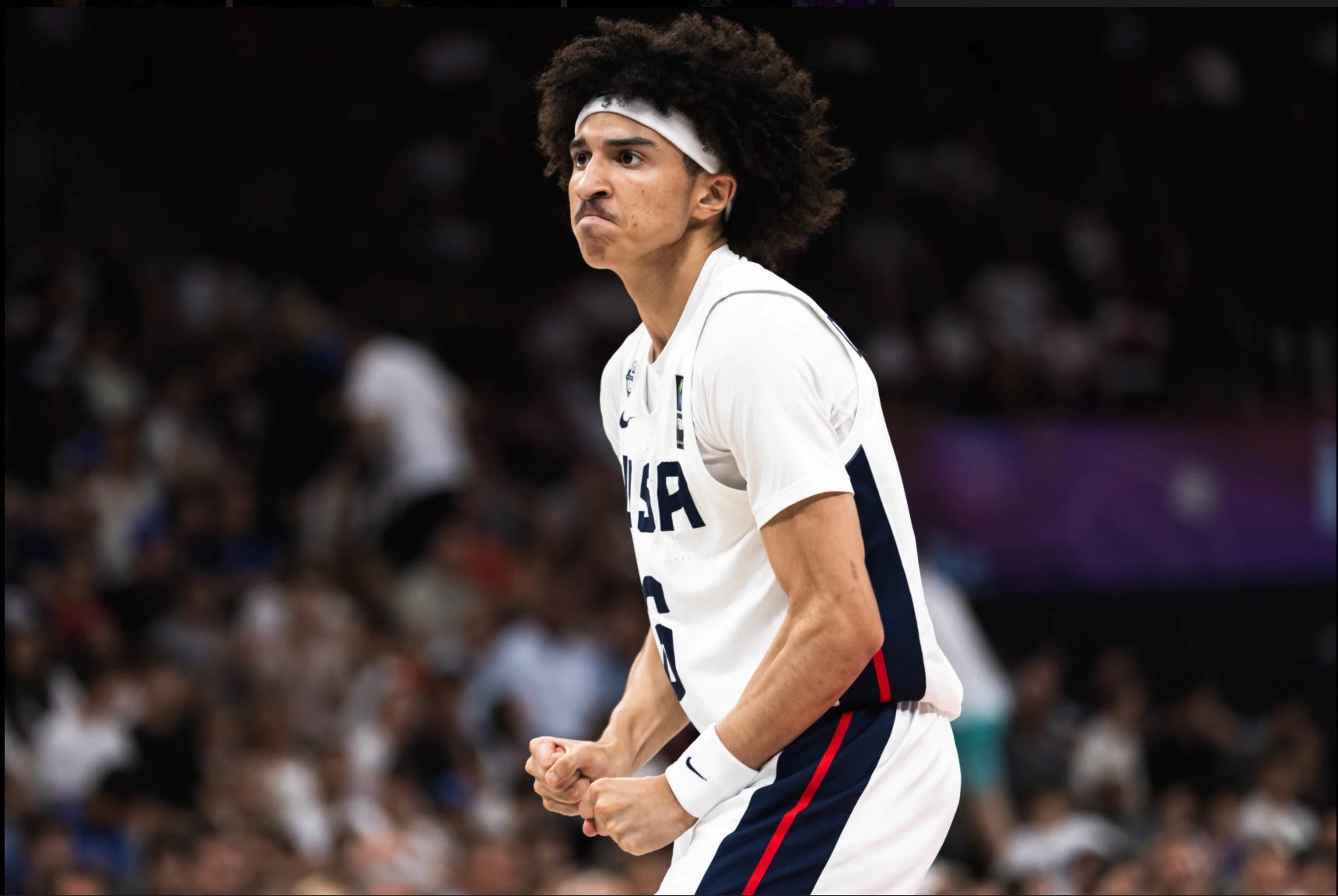
Daughtry entered the tournament with a reputation as one of the best scorers in the Class of 2027, and he certainly lived up to it.
Listed at just 5’10", Daughtry plays much bigger than his size. While his ability to score and shoot the basketball has always been his calling card, what really stood out to me was the confidence, toughness, and intensity he brought every time he stepped on the floor.
He saved one of his best performances for the biggest stage.
In the championship game against Serbia, Daughtry scored 15 points while adding three assists and two steals in just 18 minutes, providing another offensive spark off Team USA’s deep bench.
For the tournament, he averaged 11.7 points, 4.7 assists, and 1.1 steals in just 17.9 minutes per game while posting outstanding 56/45/82 shooting splits.
Like all gifted scores, Daughtry knows how to get to the foul line.
Despite never playing more than 23 minutes in a game, he recorded three games with at least six free throw attempts or more. That’s a testament to his aggressiveness, his ability to attack defenders off the dribble, and his willingness to play through contact despite giving up size to almost everyone on the floor.
His combination of shot making perimeter shooting and ability to generate fouls made him one of the most efficient offensive guards in the tournament.
Defensively, he more than held his own as well.
Daughtry averaged 1.1 steals per game and competed with the same confidence and edge that define his offensive game.
Looking ahead, there’s no denying that size will always be part of the conversation. The NBA has historically been difficult for undersized guards, and players with Daughtry’s frame often face an uphill battle.
But if there’s one thing this tournament reinforced, it’s that Daughtry has the mentality to overcome those questions.
Jordan Page
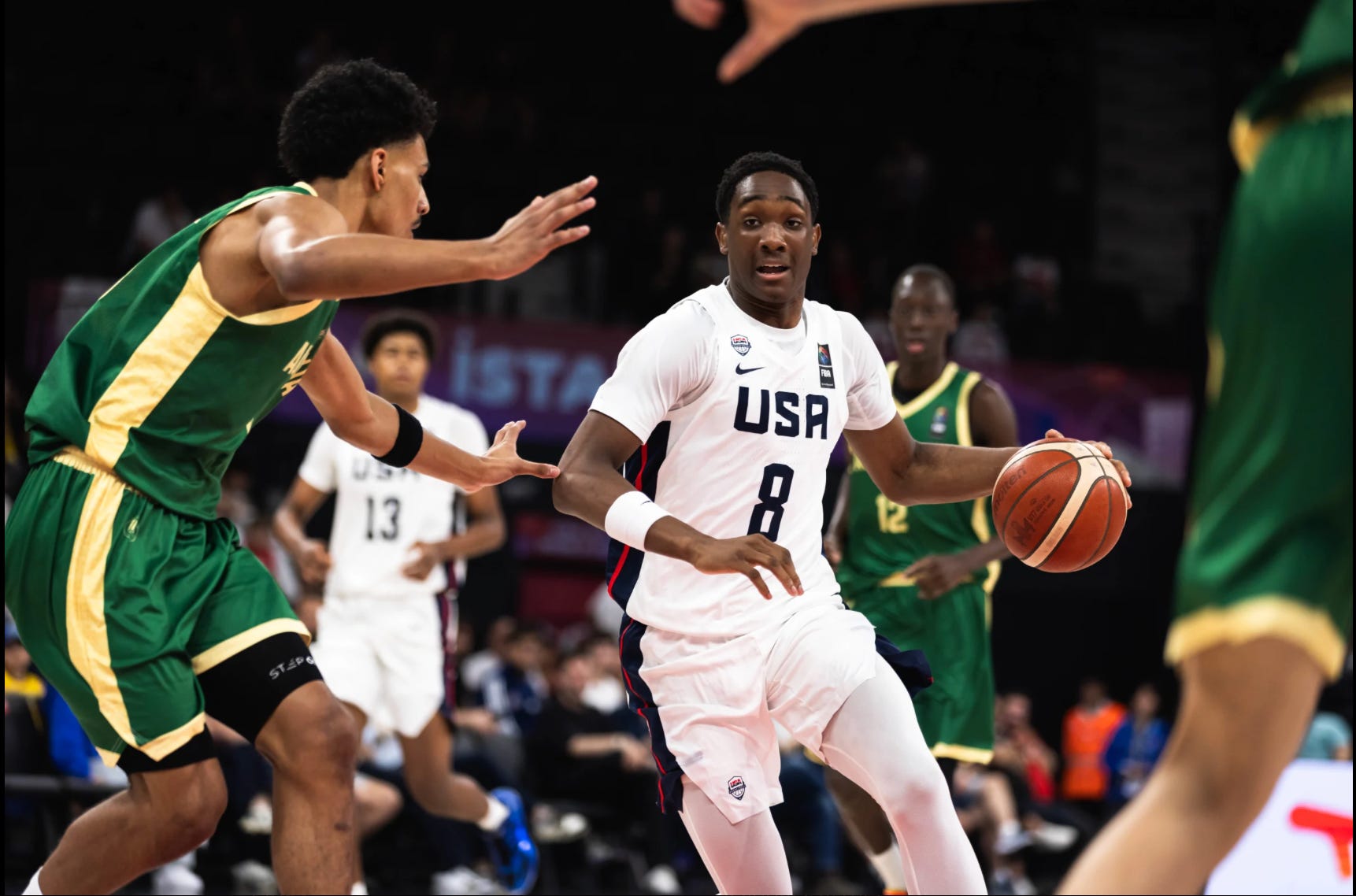
Page embodied the phrase, “Be a star in your role,” and that’s exactly what he did throughout Team USA’s championship run.
The Americans didn’t need Page to carry the offense. They needed him to defend, bring energy, attack the rim, and make winning plays.
Mission accomplished.
Page averaged 9.8 points, 2.2 assists, and 1.7 rebounds per game and was crazy efficient from the floor.
He shot 23-33 from the field, good for 69 percent, and converted all 12 of his free throw attempts during the tournament.
He relentlessly attacked the paint, ran the floor in transition, finished at the rim, and drew fouls.
He understood exactly who he was as a player, and he never tried to be anything else.
That unselfishness made him an ideal fit alongside Team USA’s more gifted scorers.
His athleticism and motor also made a significant impact on the defensive end.
Page defended multiple positions, played with tremendous energy, and gave Team USA another athletic wing capable of making life difficult for opposing ball handlers.
Not every player has to fill up the scoring column to be valuable.
Sometimes the most important players are the ones who embrace their role, maximize their strengths, and do all of the little things that contribute to winning.
That’s exactly what Jordan Page did.
Asa Montgomery
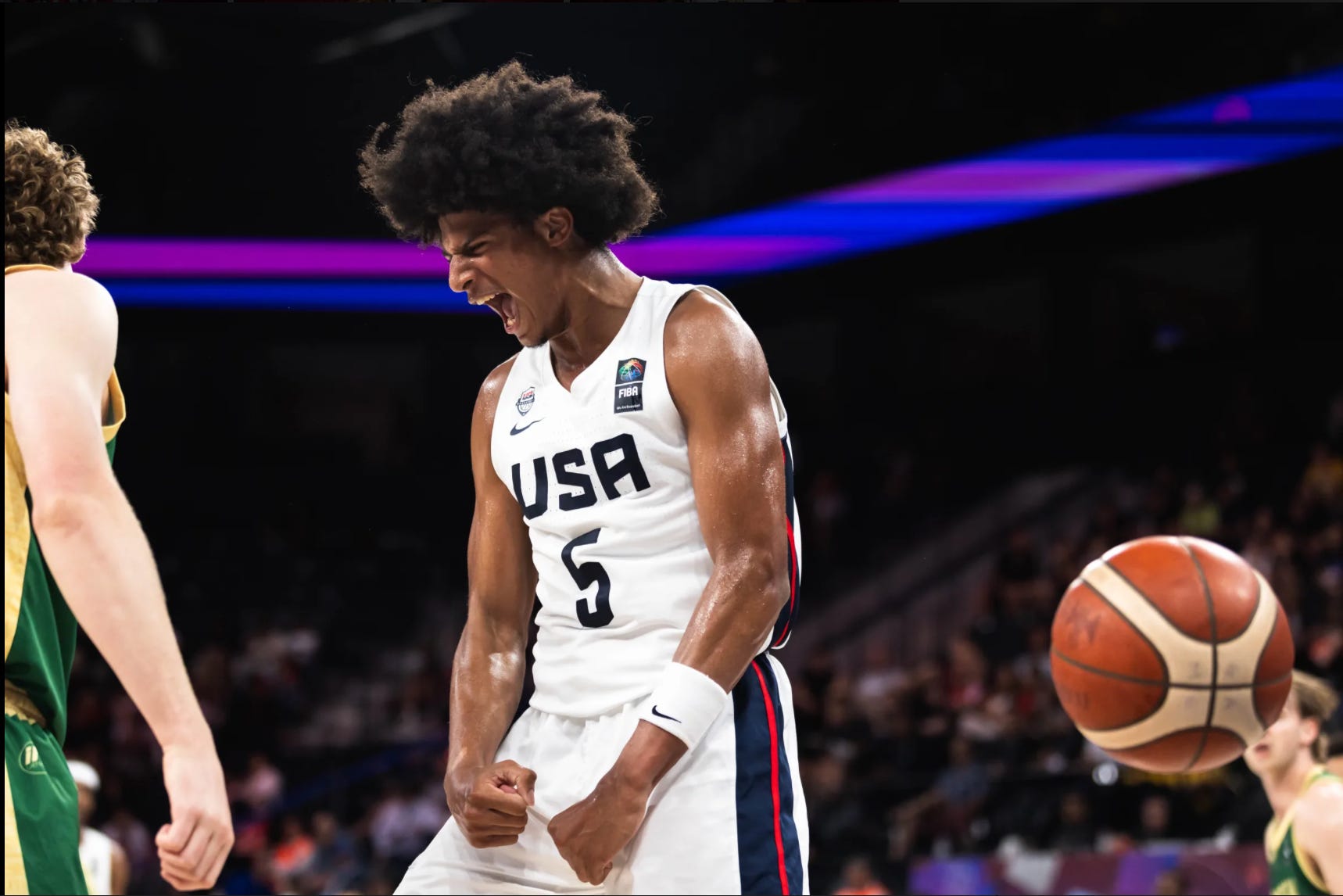
Montgomery was a key member of Team USA’s “Bench Mob,” joining Navarro Bowman Jr. and Cayden Daughtry in a second unit that often overwhelmed opponents with its energy and defensive intensity.
Honestly, it felt like the second unit rarely needed to run a set play.
They simply checked into the game, blitzed ball handlers, forced turnovers, and turned defense into easy offense. It was dunk after dunk, lob after lob, and transition basket after transition basket.
Montgomery was right in the middle of it all.
He left his fingerprints all over the game on the defensive end, using his length, athleticism, and instincts to wreak havoc in the passing lanes. He averaged 1.3 steals per game in just 17 minutes, but his impact extended well beyond the box score.
Or at least that’s what it felt like in real time.
Then you look at the box score, and you realize he actually filled it up.
Montgomery averaged 9.7 points, 4.4 rebounds, and 2.1 assists while shooting an efficient 66 percent from the field. He was active on both ends of the floor, consistently making hustle plays that helped fuel Team USA’s dominant runs.
The only area where he struggled was from beyond the arc, finishing just 2-12 from three point range. While it’s a small sample size, he did show encouraging touch at the free throw line, converting 10 of his 12 attempts.
What impressed me most was his versatility.
Montgomery defended multiple positions, crashed the glass, moved the ball, and constantly played with energy. He wasn’t chasing statistics. He simply played hard every possession, and the numbers naturally followed.
I thought he quietly put together one of the better tournaments on the roster and raised his profile in Istanbul.
Mason Collins, Erick Dampier Jr. and Xavier Young
Last but certainly not least, Mason Collins, Erick Dampier Jr., and Xavier Young all had moments where they made meaningful contributions to Team USA’s championship run.
Collins quietly put together one of the more well rounded tournaments on the roster.
He averaged 7 points, 3.3 rebounds, and 3.1 assists per game. I view Collins as a connector, a player who can do a little bit of everything without needing the offense to revolve around him. He moved the ball, defended, made winning plays, and consistently filled up the stat sheet.
His best performance came against Japan, when he finished with 12 points on 6-7 shooting while adding five rebounds, three assists, and five steals. In fact, Collins recorded five steals in two different games, showcasing his instincts and activity on the defensive end.
I know my brother James has been a huge Mason Collins fan for quite some time, and after watching him throughout this tournament, it’s easy to understand why.
Erick Dampier Jr., the son of former NBA center Erick Dampier, also played an important role despite not looking to score very often.
Dampier Jr. averaged 5 points, 5.7 rebounds, and 3.3 assists per game while shooting an impressive 17-22 from the field.
If anything, I thought he left some offensive opportunities on the table because he was almost too unselfish. He rarely looked for his own offense, but when the ball found him around the basket, he finished efficiently.
His rebounding was outstanding.
He’s one of those guys who seems to come away with every rebound he gets a hand on, thanks to his strong hands and physicality.
What also stood out was his passing.
Dampier Jr. made several good reads from the high post, found cutters, and displayed impressive vision for a player his size and age. His 3.3 assists per game were a reflection of just how comfortable he is facilitating offense.
Xavier Young rounded out Team USA’s deep rotation and made the most of his opportunities.
Young averaged 7.6 points, 3.7 rebounds, and 1.4 assists in just 14 minutes per game while shooting an efficient 21-27 from the field.
He also showed an ability to the line, attempting 23 free throws throughout the tournament despite his limited playing time.
He runs the floor, finishes above the rim, and plays with energy.
Perhaps what’s most encouraging is that he was the second youngest player on Team USA’s roster.
The youngest was JJ Crawford, the son of former NBA Sixth Man of the Year Jamal Crawford. Crawford entered the tournament as the consensus No. 1 player in the Class of 2029, but injuries limited his availability throughout the event.
Even without being at full strength, Crawford’s presence served as another reminder of just how loaded this Team USA roster really was.
It wasn’t just talented.
It was historically deep.
Mason Collins is my favorite guard in 2028 shoutout to James lol