
Hoop Summit Takeaways: Stars, Struggles, and a Murky 2027 Class
Why this year’s event raised more questions than answers about the next wave of talent

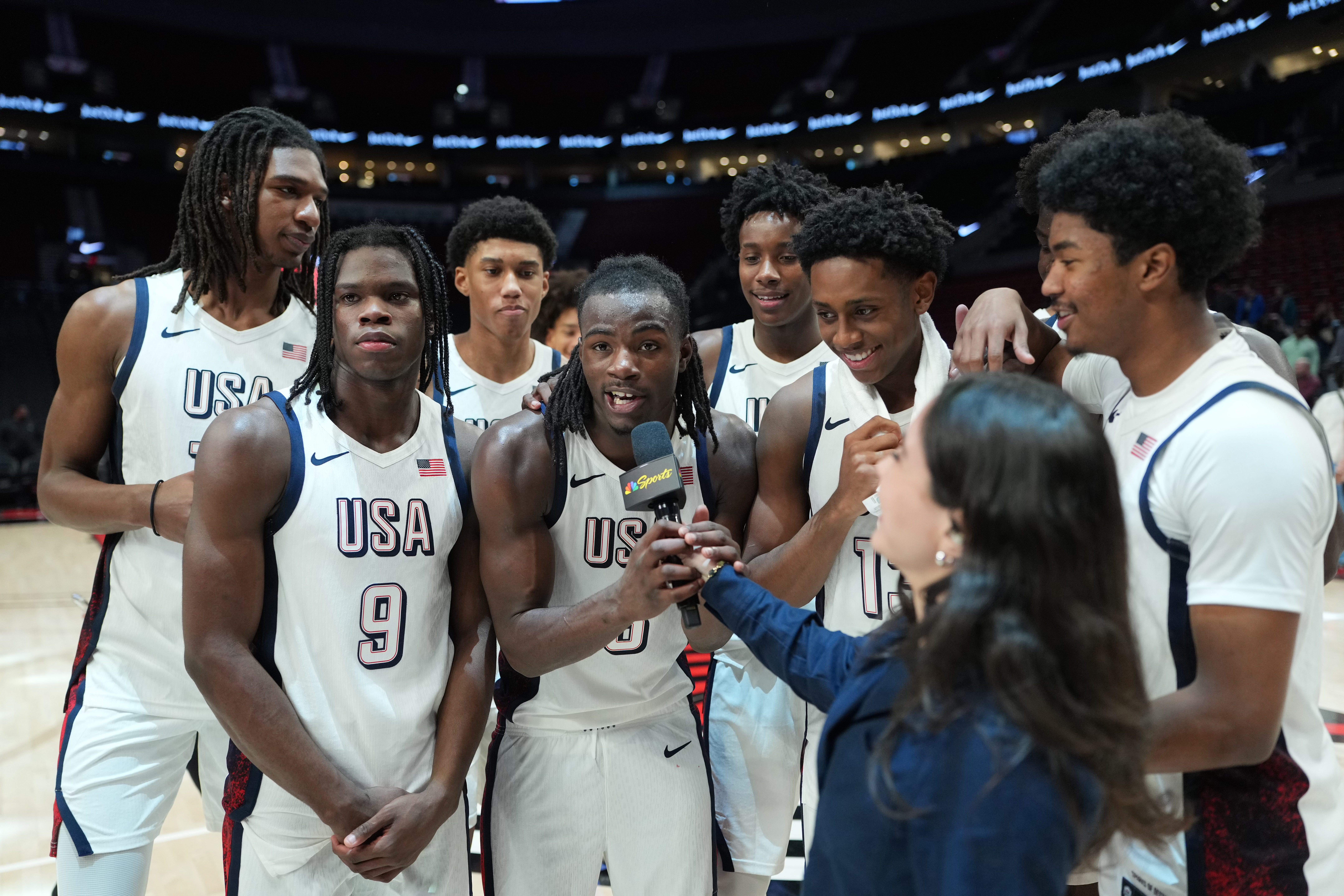
Every year, the basketball world gets an early glimpse of its future at the Nike Hoop Summit in Portland.
Some of the biggest names in basketball history made their introductions to the basketball world on these Saturday nights in April. Names like Dirk Nowitzki, Nikola Jokic, and Shai Gilgeous-Alexander have represented the World Team. On the American side, you might have heard of a few players like Derrick Rose, Kevin Durant, and Jayson Tatum.
Altogether, the event has featured six MVPs, 41 NBA All-Stars, and over 100 lottery picks.
So if you’re there, you’re firmly on the NBA radar.
A Loaded Present, But an Uncertain Future
In 2025, we saw future lottery picks like AJ Dybantsa, Darius Acuff Jr., Cameron Boozer, and Mikel Brown Jr. take on a talented World Team featuring players such as Tounde Yessoufou, Dame Sarr, and Dash Daniels.
The 2026 draft class is widely viewed as loaded. In fact, eight teams finished with at least 55 losses this season, an NBA record, largely in pursuit of that talent.
But the 2027 class feels different.
The 2025 draft gave us stars like Cooper Flagg and Kon Knueppel, forming one of the strongest classes in years. The 2026 group looks like it could match that level of talent.
The 2027 class, though, lacks that same early clarity.
Many executives don’t view it as particularly strong, and I agree. Someone will emerge as an All-Star, but it’s far less obvious who that will be compared to recent years.
That uncertainty showed up in Portland.
This year’s Hoop Summit game lacked polish and high-level execution. The game featured 54 turnovers, and the point guard play for Team USA was underwhelming.
Even the No. 1 player in the class, Tyran Stokes, struggled to find consistency.
Still, there were standout performances worth breaking down.
Standout Performers
Miles Sadler | West Virginia | Point Guard
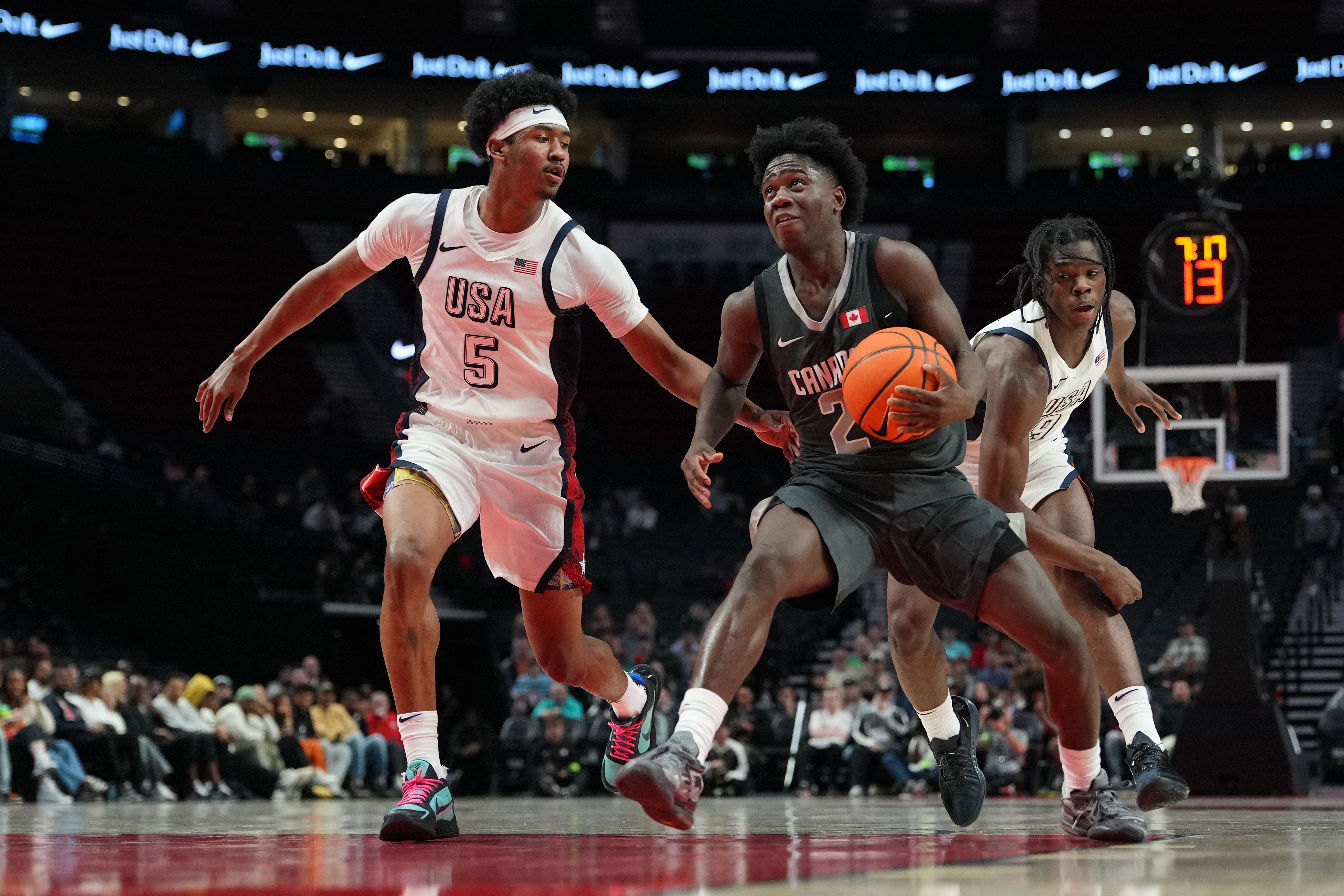
Sadler was the star of the show.
Somehow snubbed from the McDonald’s All-American Game, he made a strong case as the best point guard in the country. Others may be bigger, but he’s the most dynamic.
He’s a blur with the ball. Picking him up full court is a mistake, and pressuring him beyond the three-point line is just as risky. He’s too fast, too shifty, and an excellent passer.
Sadler made life easy for athletic bigs like Paul Osaruyi and Miika Muurinen, to the point where they should seriously consider following him to Morgantown.
If this were 25 years ago, Sadler would be viewed as a lottery pick. But the position has changed. Smaller guards are increasingly seen as liabilities.
He finished with 29 points, 4 rebounds, and 7 assists, leading all scorers. The downside was 11 turnovers, many coming from being forced into tight spaces.
He’ll need to be more selective when attacking the defense.
Tyran Stokes | Undecided | SF/PF
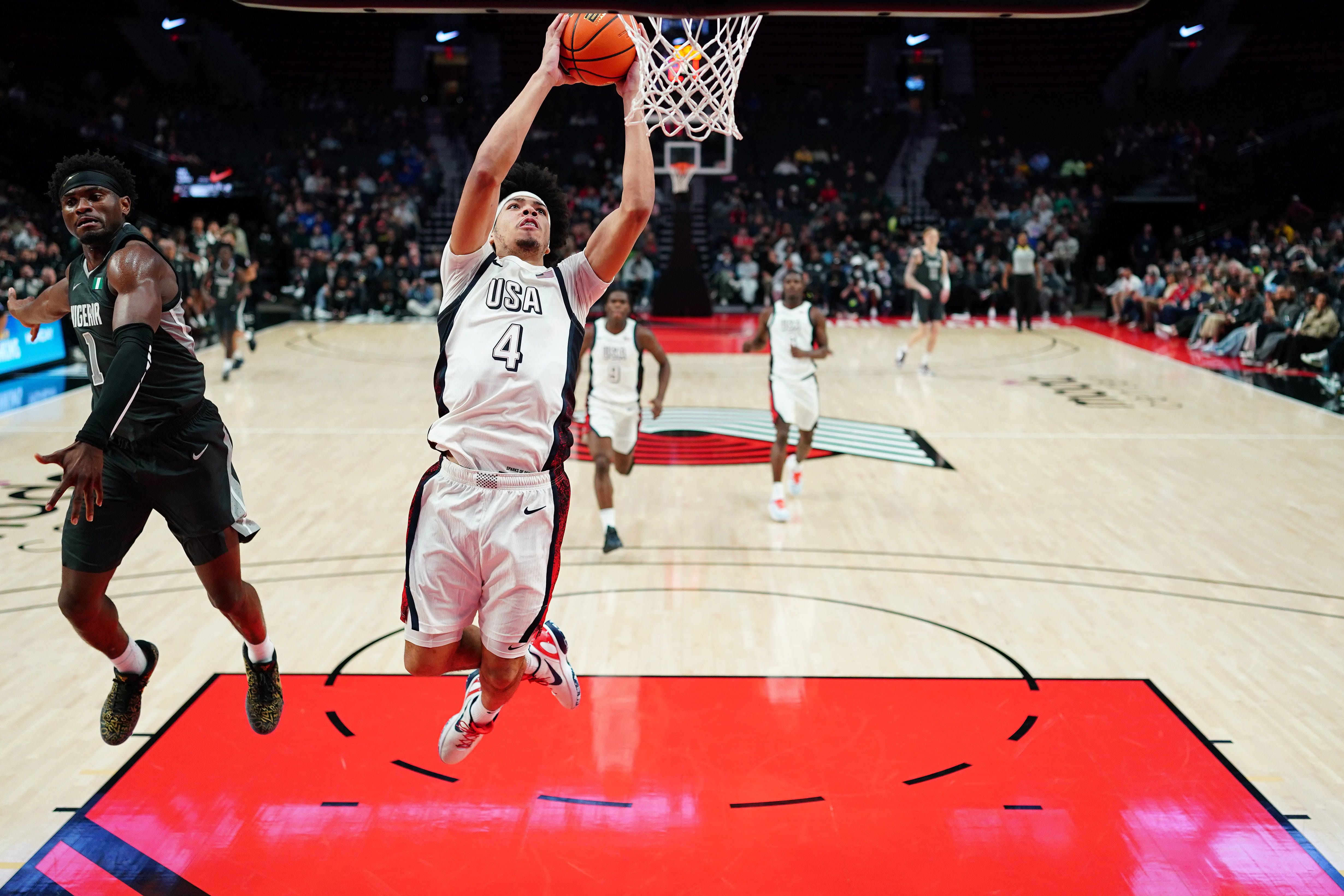
Stokes did not have his best showing.
The No. 1 ranked player in the class scored 15 points before fouling out. The numbers look solid, but most of his scoring came in transition. He also had four turnovers and no assists.
Despite that, Stokes remains the favorite to go No. 1 in 2027.
He’s a strong passer with an NBA-ready body and projects as a ball-handling wing who can play either forward spot. He also wouldn’t be the first elite prospect to struggle in this setting.
Cooper Flagg had a slow start in 2024 before finishing strong, and things turned out just fine.
Stokes remains undecided on his college destination, but he should have a productive freshman season wherever he lands.
Jordan Smith Jr. | Arkansas | Shooting Guard
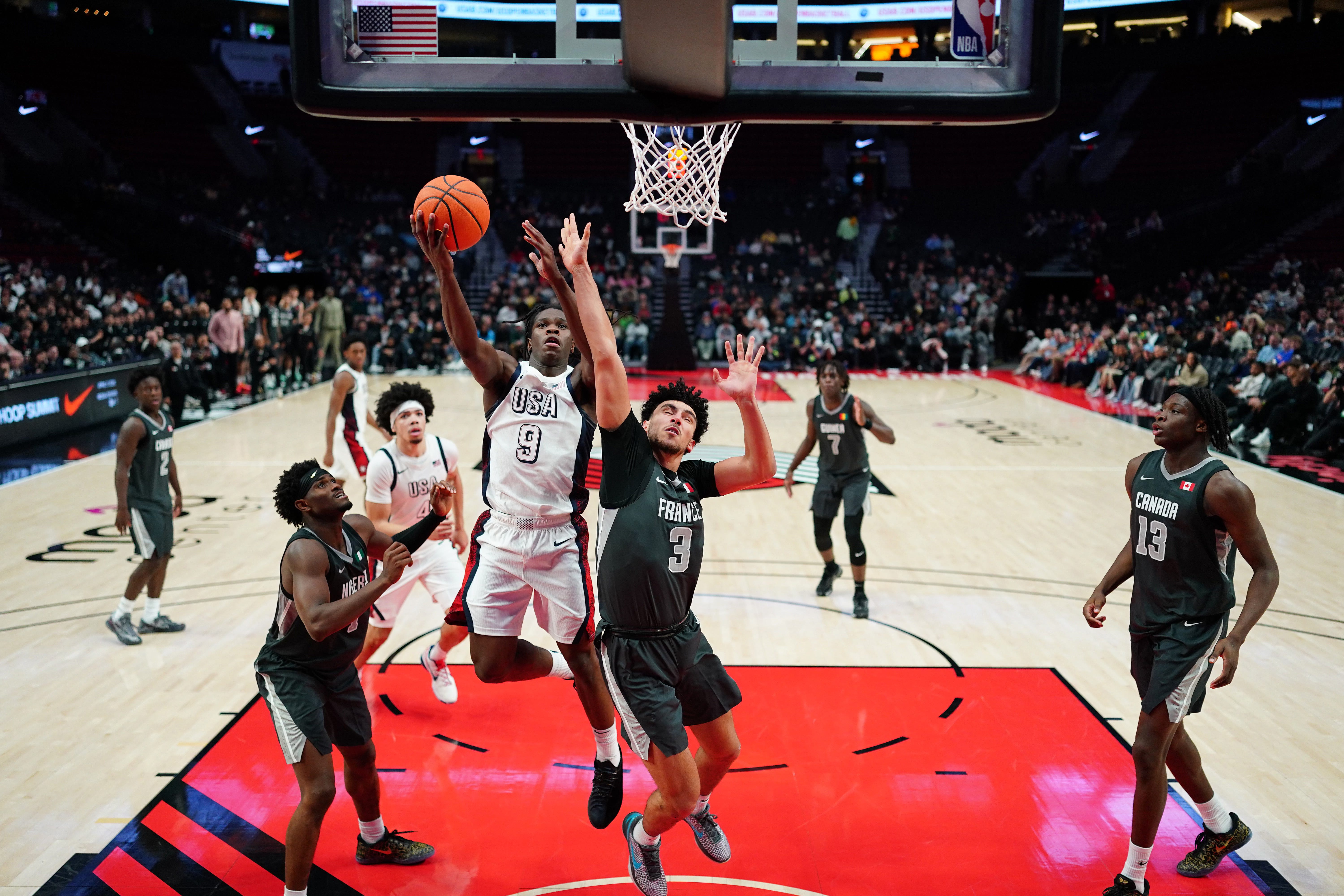
Fresh off winning MaxPreps National Player of the Year, Naismith Player of the Year, and Virginia Gatorade Player of the Year, Smith Jr. entered with serious momentum.
He’s an explosive two-way shooting guard who can score off the catch and off the dribble while defending at a high level on the ball.
He finished with 13 points on 6-of-11 shooting.
The biggest question is his playmaking. He plays more like a traditional scoring guard, relying heavily on pull-up jumpers.
If he reaches a ceiling similar to a Donovan Mitchell-level scorer, it works. If not, his floor remains high as a valuable role player.
Defensively, he could have an impact similar to Cason Wallace.
The key question is whether you can draft an undersized shooting guard high and build around him.
Caleb Holt | Arizona | Combo Guard
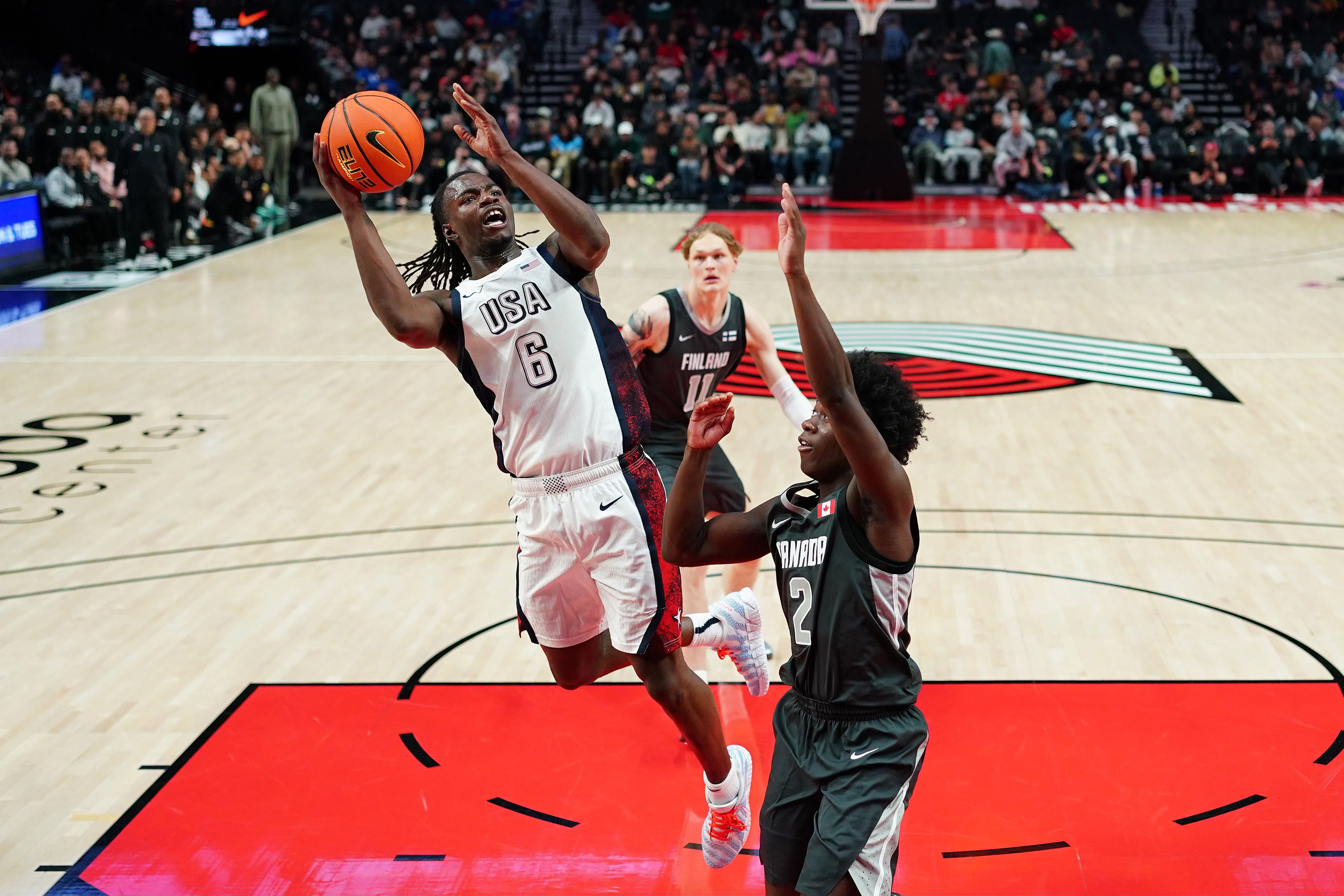
Holt is labeled as a combo guard, but like Smith Jr., he projects more as a scoring guard than a primary ball handler.
That’s not a knock.
He has improved significantly as a shooter, going from 35 percent on the Adidas circuit to 42 percent this past season with Prolific Prep.
Pair that with his defensive intensity, and he looks like a potential top-five pick.
Holt recorded seven steals in the game, continuing a season-long trend of disruptive defense.
Following in the footsteps of Brayden Burries, Holt could emerge as Arizona’s next lottery-level talent. He finished with 24 points and 8 rebounds to go along with his defensive dominance.
Lucas Morillo | Illinois | Playmaking Wing
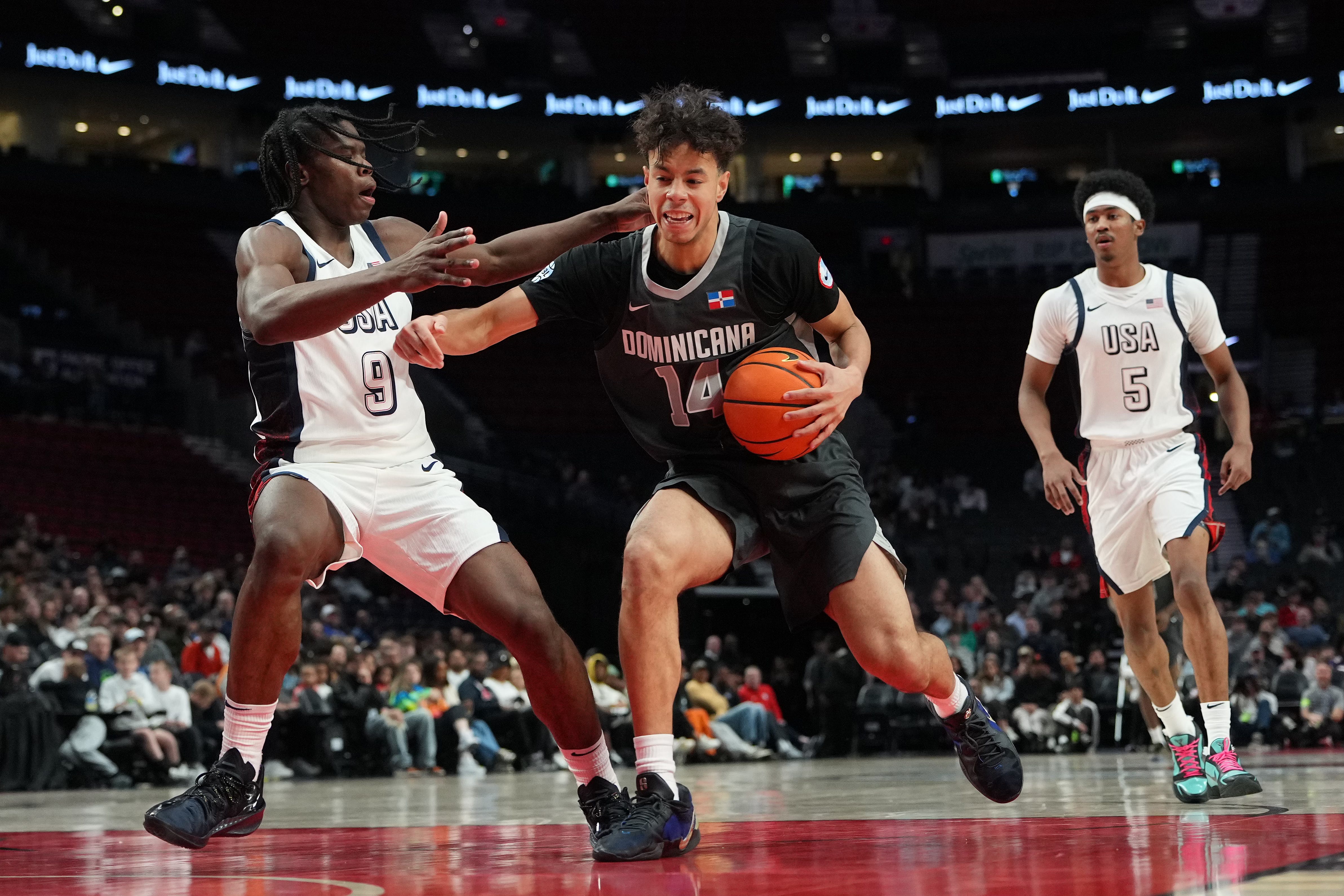
Sadler may have been the star, but Lucas Morillo was one of the most impressive long-term prospects.
The 6’7” wing handled pressure well against defenders like Caleb Holt and Brandon McCoy. He played at his own pace and consistently got to the rim.
His game mirrors the archetype of jumbo playmakers, similar to Illinois guard Keaton Wagler.
Morillo isn’t the same level of shooter yet, but he could follow a similar developmental path, much like Kasparas Jakicionis before him.
His path to immediate stardom may be complicated, especially with Illinois potentially returning key players and adding more talent.
For Morillo, continued improvement as a shooter will determine how quickly he reaches the next level.
Quick Hitters
Abdou Toure | Arkansas
Toure put together one of the most impressive stat lines of the event with 19 points, 6 rebounds, and 5 blocks. He joins an athletic frontcourt in Fayetteville and could develop into a one-and-done prospect in a wide-open draft.
Miika Muurinen | Undecided
Muurinen built on his strong EuroBasket performances. While Lauri Markkanen owns the nickname “The Finnisher,” Muurinen fits the mold as a play finisher. At 7 feet tall, he thrives in the dunker spot and on the glass. His role is clear, and there is a place for that skill set at the next level.
Adam Atamna | France
Atamna entered with buzz as one of the top international prospects. Known as a shooter, he struggled with the pace and looked sped up. International travel can take a toll, so it’s fair to give him some leeway.
Jason Crowe | Missouri
Crowe is a natural scorer and the all-time leading scorer in California high school history. He’s extremely comfortable shooting off the dribble and from NBA range. The question is what else he brings to the table beyond scoring, especially at the next level.
Final Thoughts: More Questions Than Answers
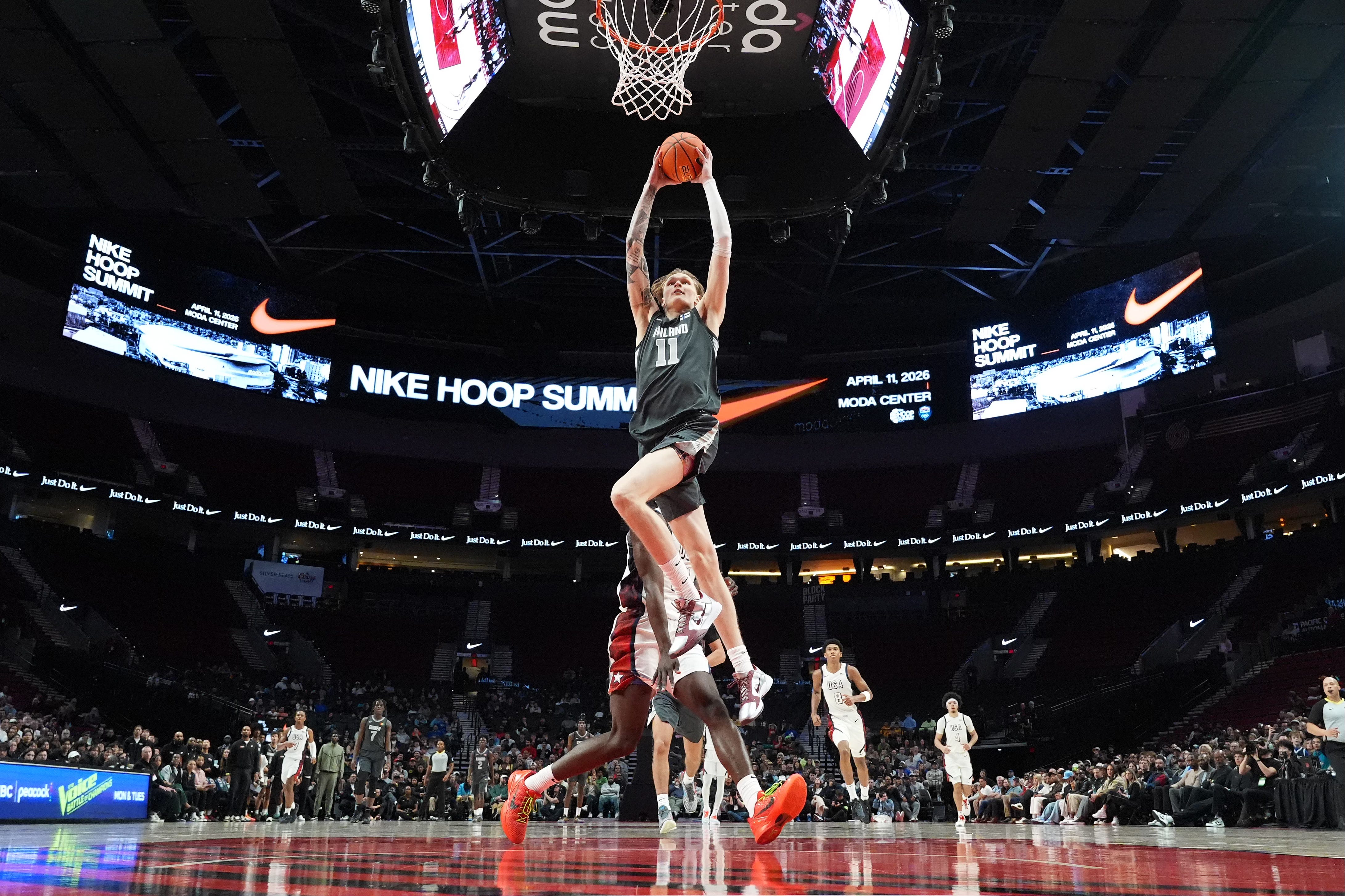
This year’s Nike Hoop Summit didn’t provide the clarity we’re used to.
Instead, it raised questions.
About the strength of the 2027 class.
About positional value.
About which players can truly translate to the next level.
There’s talent, no doubt. But for the first time in a while, the future feels uncertain.
And that might be what makes this class the most interesting one yet.
As usual you are Always spot on!!🙏🏾💪🏾💯
Great read! Any thoughts on where Tyran may go?