
FIBA U18 EuroBasket Scouting Notebook Part II: What I Learned in Trentino
While the tournament featured only a handful of legitimate NBA prospects, it was loaded with high major college talent that deserves far more attention.

The FIBA U18 EuroBasket remains one of my favorite events to cover every summer. It gives many of Europe’s top young prospects, players who are already on NBA radars, an opportunity to compete in front of NBA executives, international scouts and an increasing number of college coaches.
As basketball continues to globalize and more European players are choosing to take the college route, it’s become common to see coaches from high and mid major programs in the bleachers in search of impact players.
This year’s tournament featured many of the biggest names from Europe’s 2008 generation, but it also introduced several prospects who significantly raised their profiles. While a handful project as future NBA players, I also came away believing there are several others who could become difference makers at the college level if they decide to pursue that path.
A few days ago, I broke down six prospects who caught my attention in Trentino. In Part 2, I’ll highlight several more players who stood out during the tournament, sharing what I learned, the questions that still remain and where I think each evaluation goes from here.
Lucai Anderson | Germany
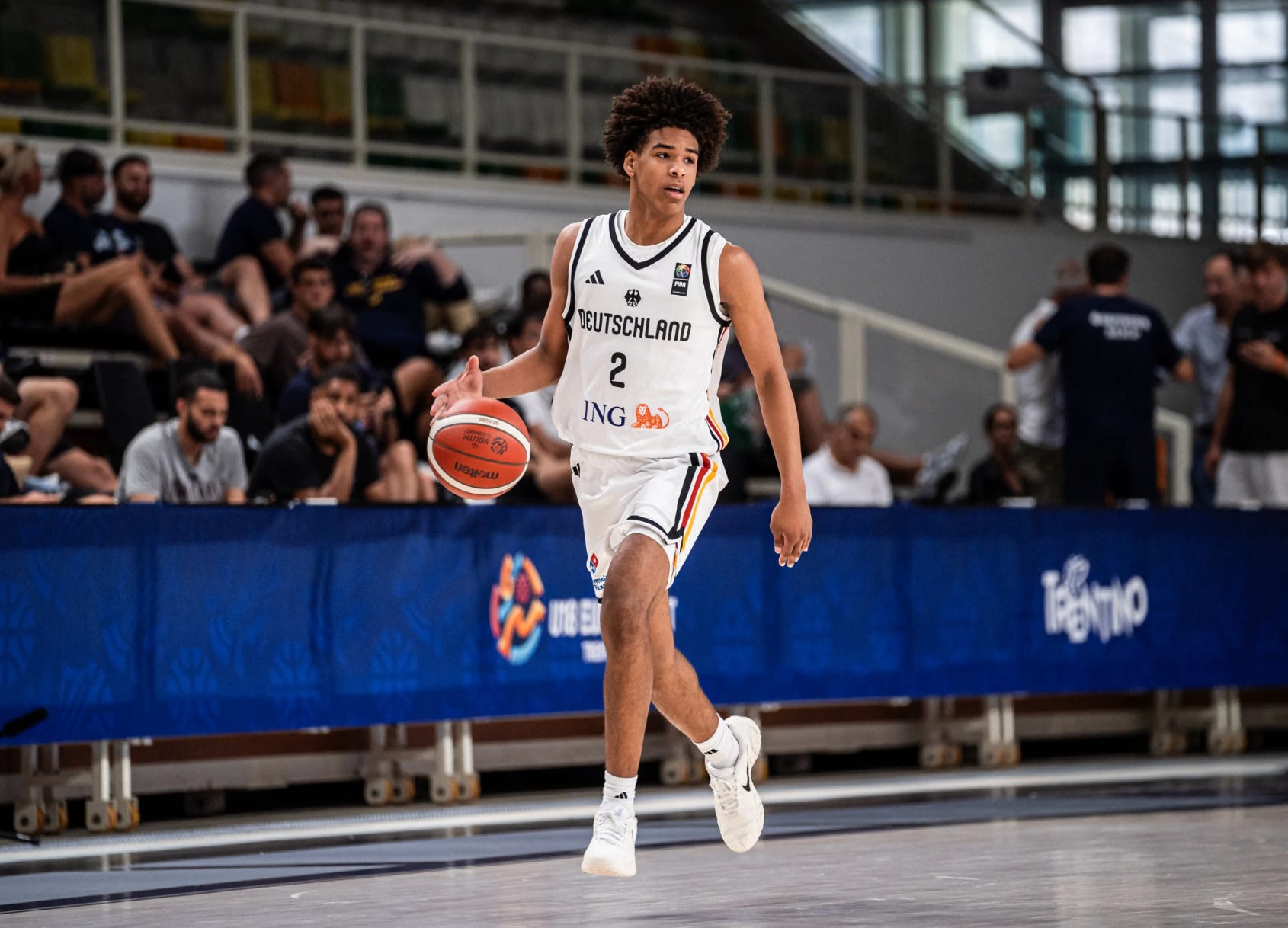
What Did I Learn?
After watching Anderson throughout the tournament, I'm a little higher on him than I was after my previous scouting trips.
His game has improved since the first time I saw him play in Belgrade earlier this season where he showed flashes but was mostly up and down with his play. Stylistically, he still reminds me a lot of his older brother, Christian, but at this stage, Lucai is already a little bigger. Listed at 6’4”, he has good positional size for a point guard and put together a strong tournament, averaging 15 points, 4.9 assists and 3 rebounds per game. His best performance came against Lithuania, where he finished with 24 points, 6 rebounds and 5 assists.
The biggest takeaway for me was his shooting.
Anderson showed that he can really make shots when his feet are set, connecting on 37 percent of his catch and shoot threes. He also displayed the ability to knock down movement threes and looked comfortable pulling up from the midrange. He has a polished scoring package for his age, whether it is pushing the ball in transition, getting to his pull up jumper or finishing with soft touch floaters in the paint.
I also came away more encouraged by his passing than I expected. He made the simple reads, found cutters, delivered timely post entry passes and flashed the ability to make live dribble reads that suggest there is more playmaking upside than I initially thought.
Another thing that stood out was his toughness.
Despite his baby face and unassuming appearance, Anderson plays with some grit. He snuck in for several offensive rebound putbacks, competed on the glass and showed that he is a very good rebounder for a guard.
What Questions Remain?
The biggest question revolves around his decision making.
Anderson is an extremely confident player, and that confidence is one of his strengths. At times, however, it also leads him into difficult shot selection. He is willing to take heavily contested jumpers and challenge defenders in situations where a simpler play may be available.
While I thought he made encouraging strides as a passer, taking care of the basketball is still a work in progress.
He averaged 4.4 turnovers per game and committed five or more turnovers in four different games. There are times when he forces passes or tries to make the spectacular play instead of the simple one.
The talent is evident. Now it is about becoming more efficient with the decisions that come along with having the ball in his hands so often.
Where Does the Evaluation Go From Here?
I think Anderson has a really solid foundation to build on.
I expect him to develop into a very good shooter both off the catch and off the dribble. His rebounding, competitiveness and scoring instincts are already positives.
The next step is becoming a more efficient offensive player by improving his shot selection and limiting the turnovers. He is always going to be wired to score, but if he can prove that he is a scoring point guard who also takes care of the basketball, I think he is going to become one of the more intriguing names to watch over the next couple of years.
It’s also worth remembering that Anderson was one of the younger players in the tournament. While most of the field was made up of 2008 born prospects, Anderson was born in 2009, giving him another opportunity to return next summer.
If he does, I expect him to enter the tournament as one of the premier players in the field and one of the biggest names to watch.
Leonard Kroger | Germany
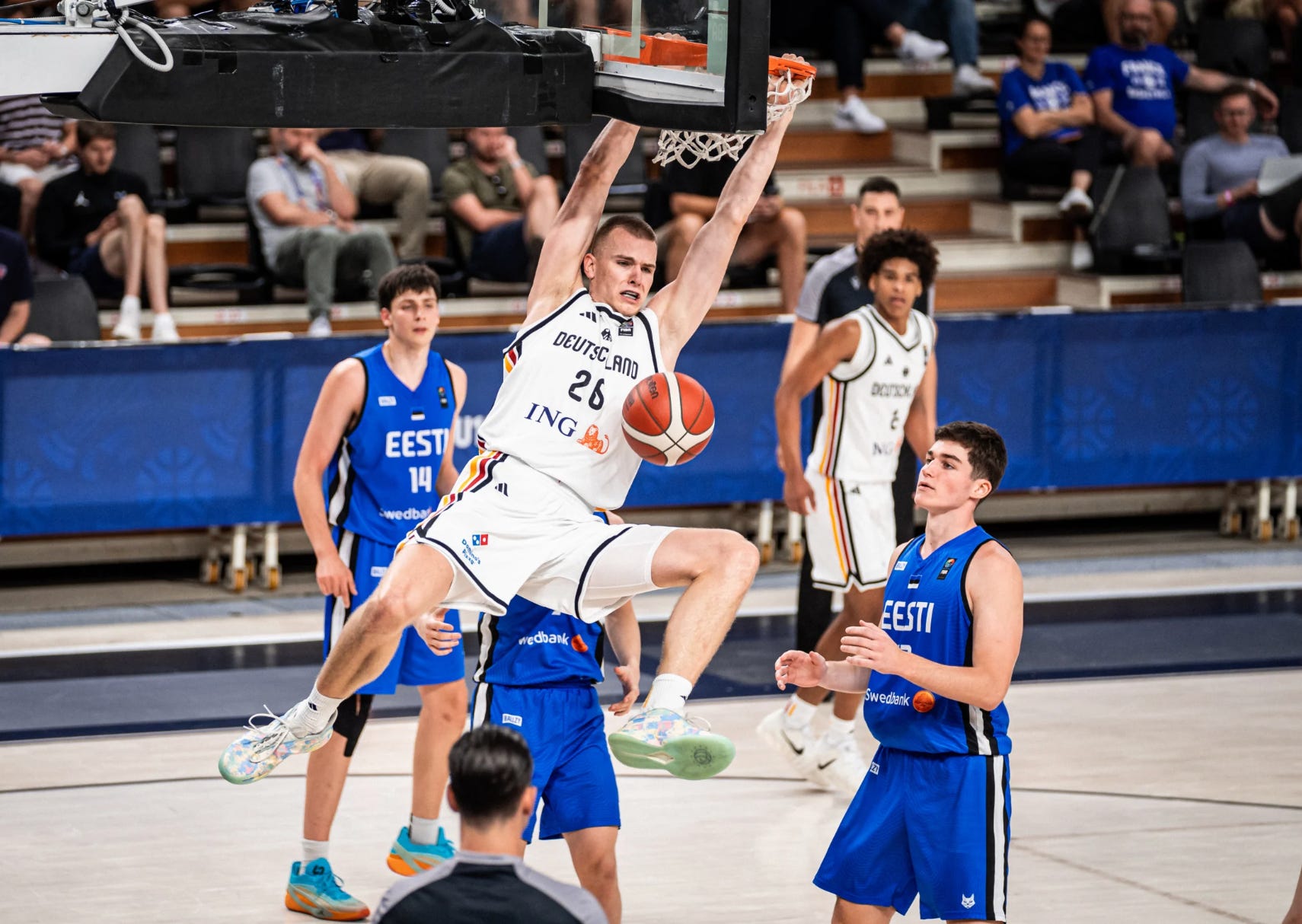
What Did I Learn?
Leonard Kroger was one of the biggest surprises of the tournament for me.
I had watched him a few months earlier, and while I thought he was a solid prospect, he didn’t do enough to really stand out or leave a lasting impression. That changed in Trentino.
I came away believing Kroger deserves to be mentioned among the better prospects in Europe in his age group, and his selection to the All Tournament Team, ahead of more heralded German teammates Lucai Anderson and Fabian Kayser, backed up that opinion.
Kroger averaged a double double with 11.3 points, 10.1 rebounds, 1.7 assists and 1.6 stocks per game, but what really stood out was his efficiency.
Once he caught the ball around the basket, it almost felt like he wasn’t going to miss. Kroger shot 71 percent from the field, doing nearly all of his damage in the paint.
He has soft hands, an active motor and excellent timing around the rim. He finishes strong in the paint, made several plays above the rim and understands his role as a rebounder and play finisher.
He was also one of the tournament’s best offensive rebounders, averaging four offensive rebounds per game. His activity around the basket created a number of second chance opportunities, and I thought he showed more feel as a passer than I expected. He made several good short roll reads and picked up multiple assists by kicking the ball out after offensive rebounds.
He doesn’t try to do too much, but he does the things he’s asked to do at a very high level.
What Questions Remain?
The biggest question is how his game scales up.
At 6’8”, Kroger is undersized to project as a full time NBA center, yet he hasn’t shown any perimeter skill to comfortably project as a power forward.
He rarely looks to space the floor and wasn’t a factor as a perimeter shooter during the tournament.
The free throw shooting also leaves room for improvement. He converted just 13 of 23 attempts, which raises questions about how much shooting upside there is long term.
I’d also like to see him become more impactful as a rim protector. Despite his activity around the basket, he averaged fewer than one block per game. If he’s going to spend significant minutes as an interior player, adding more value protecting the rim would strengthen his profile.
Where Does the Evaluation Go From Here?
Kroger dramatically improved my opinion of him during this tournament, but I think he’ll need to continue expanding his offensive game to maximize his professional ceiling.
Developing a reliable jump shot or becoming a more impactful rim protector would make him a much more intriguing NBA prospect.
That said, I think his floor is pretty high.
Players who rebound, finish efficiently, embrace their role and play with a nonstop motor usually find ways to help winning teams.
If Kroger were to pursue the college route, I believe he could carve out an important role at the high major level because of his rebounding, efficiency around the basket and willingness to do the dirty work.
He may not have entered the tournament with the same level of hype as some of Germany’s other prospects, but he certainly left Trentino with my attention.
Maks Ciperle | Slovenia
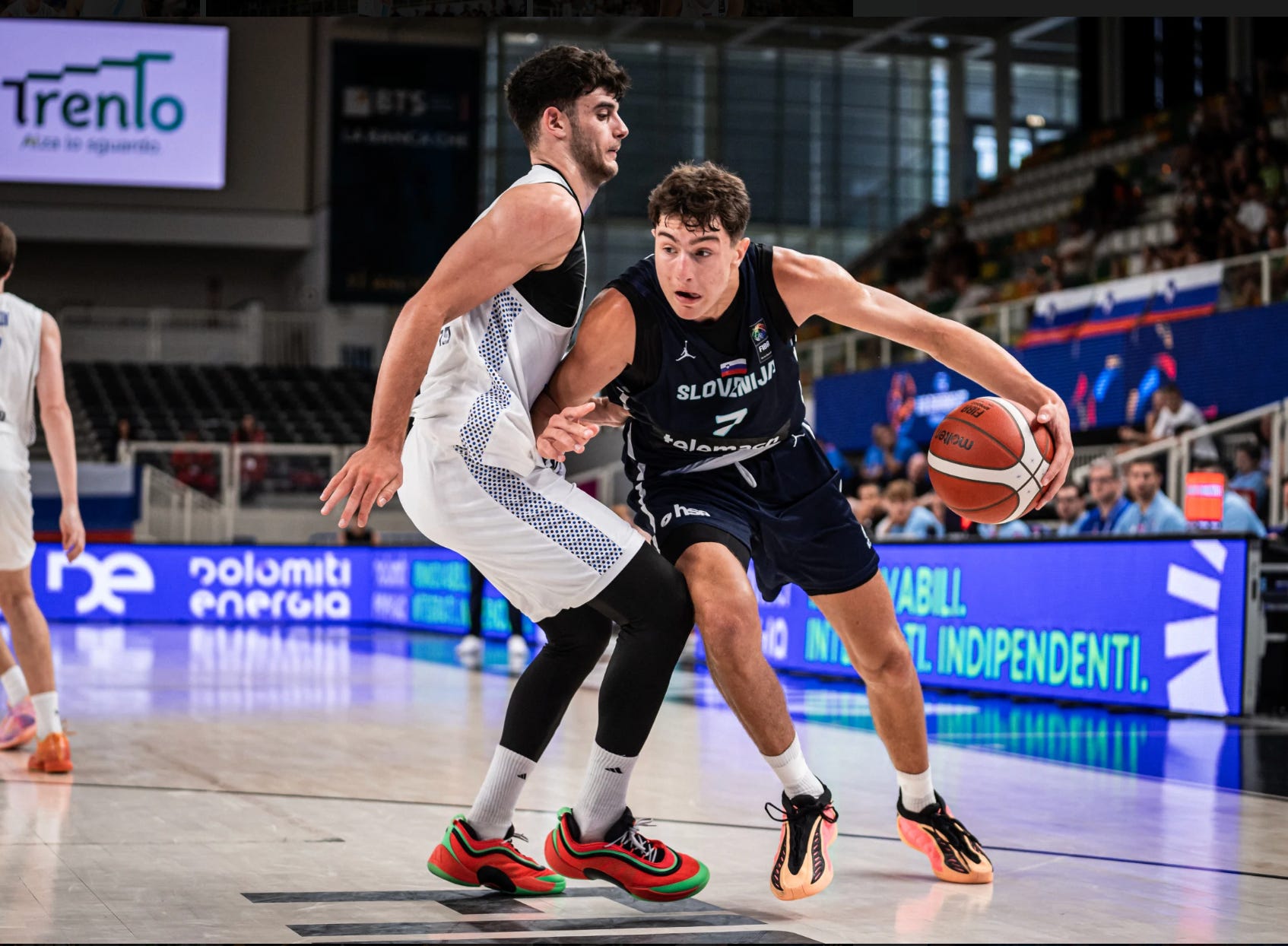
What Did I Learn?
Ciperle has been one of my favorite international prospects for several months, and this tournament only reinforced why.
I first saw Ciperle at a tournament in Ulm, Germany, and followed him again at the Albert Schweitzer Tournament, where Slovenia played without Stefan Joksimovic, who was away with the senior national team. That gave me an opportunity to evaluate Ciperle in a larger role. In Trentino, I thought he continued to show why he’s one of the more intriguing long term prospects in Europe.
Ciperle averaged 11.6 points, 7.4 rebounds, 3.7 assists and 2.8 stocks, while shooting 48 percent from the field and 35 percent from three.
What continues to impress me most is his versatility.
Slovenia used him in a variety of roles throughout the tournament. At times he initiated the offense. Other possessions he functioned as the screener or roller. He attacked off dribble handoffs, posted up smaller defenders and used his ball handling to beat bigger defenders off the bounce, particularly with his left to right crossover.
He was also effective in transition, where a large portion of his offense came in the open floor.
I believe his greatest value is as a versatile connector who can grab a defensive rebound, push the ball in transition, make the right read and impact winning without needing a high usage role.
His decision making also stood out.
Ciperle finished the tournament with 25 assists against only eight turnovers, showing the ability to make quick, simple decisions when the ball was in his hands. His chemistry with Joksimovic played a large role in Slovenia winning the tournament as they often created easy baskets for one another. Ciperle repeatedly found Joksimovic on backdoor cuts, while Joksimovic rewarded him with hit ahead passes and transition buckets.
Defensively, he may have been even more impressive.
I’ve seen him make plays on that end before, but this tournament showcased just how versatile he can be. One possession he was battling bigger players in the paint, and the next he was switching onto guards and holding his own on the perimeter. That defensive flexibility is a major part of his appeal.
What Questions Remain?
The biggest question is related how he expands his offensive repertoire.
While Ciperle shot 35 percent from three, he remains somewhat of a reluctant perimeter shooter. His first instinct is almost always to attack the basket, and I’d like to see him become more confident taking open jumpers.
I’d also like to see him expand the scoring package between the rim and the three point line.
Because he likes getting downhill, there were moments when longer and more physical defenders were able to bother him around the basket. Adding a reliable floater, runner or pull up jumper would give him another way to finish possessions without always having to challenge rim protectors.
I don’t think he needs to become a high volume scorer, but adding another layer to his half court offense would make him even more difficult to defend.
Where Does the Evaluation Go From Here?
For me, the evaluation is simple.
Ciperle just needs to continue building on the foundation he already has.
He’s versatile, unselfish, takes care of the basketball and impacts the game in a variety of ways. He rebounds, passes, defends multiple positions and understands how to play within a team concept.
Those qualities are why he’s remained one of my favorite international prospects over the past several months.
Whether he’s protecting the rim, jumping into passing lanes, initiating offense or filling a complementary role, Ciperle simply has a knack for making winning plays.
He’s the type of player who embodies positionless basketball, and I’ll be following his development closely over the next few years.
Cheik Diallo | Spain
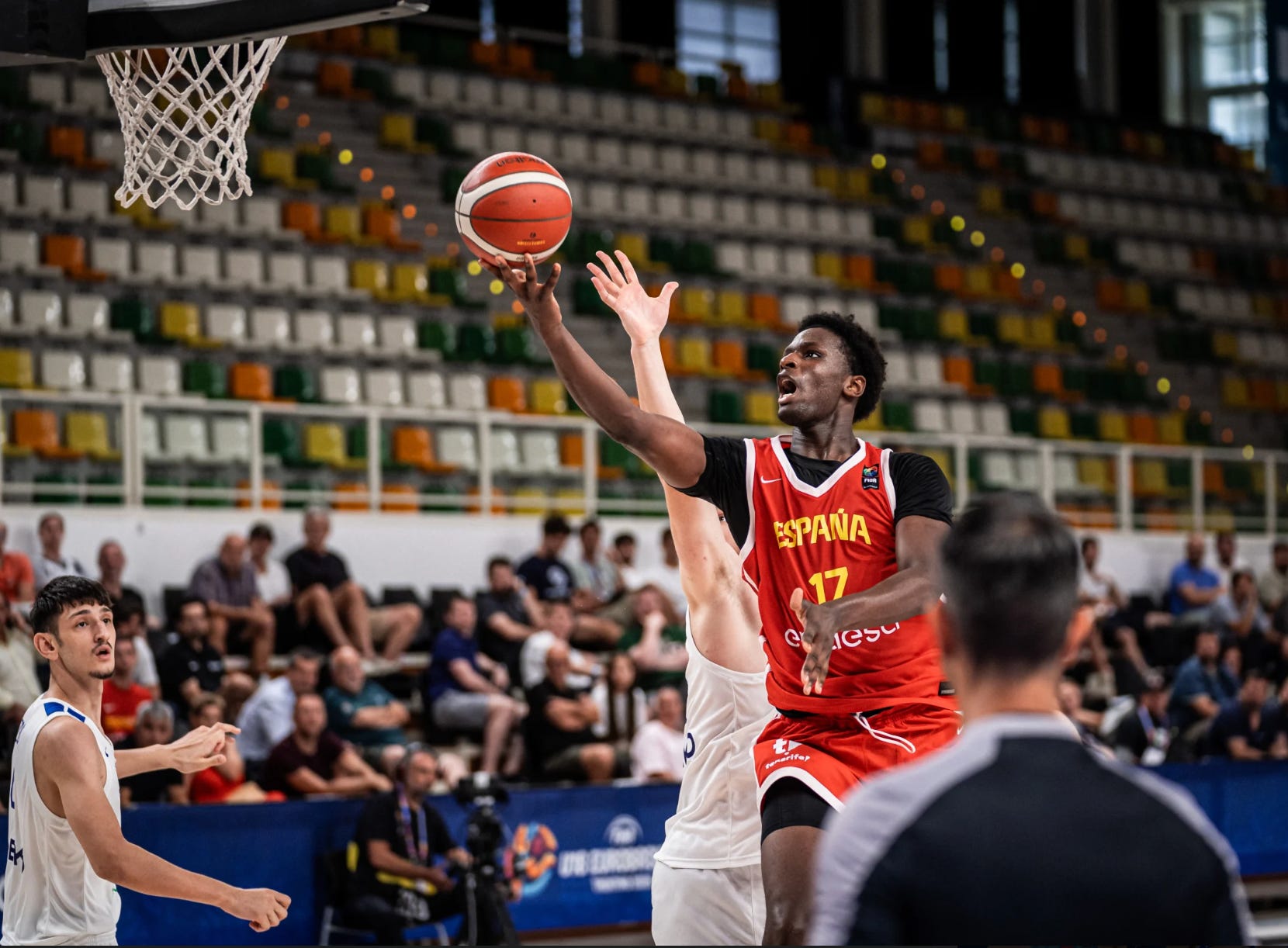
What Did I Learn?
This tournament was an important checkpoint in my evaluation of Cheik Diallo because it gave me an opportunity to compare where he is now to when I first saw him last December.
Back then, I came away thinking he was still a raw prospect, but there were flashes of offensive skill around the basket that made me want to keep tracking him. In Trentino, I thought he built on those flashes and showed meaningful progress.
Diallo averaged 11 points, 8.3 rebounds and 1.7 blocks per game, and while he’s a little undersized for a center at 6’9”, he makes up for it with mobility, coordination and athleticism.
I continue to be encouraged by his footwork and hands around the basket. He runs the floor, finishes above the rim and plays with energy. He was especially active on the offensive glass, averaging 4.1 offensive rebounds per game, which created a number of easy scoring opportunities.
What intrigues me most, though, are the offensive flashes.
Every game seemed to feature a play or two that made you stop and take notice. Diallo showed the ability to put the ball on the floor from the perimeter, attack the basket on straight line drives with either hand and displayed promising instincts around the rim.
The post game is still developing, but I also liked seeing him use a baby hook around the basket. That’s a skill I believe every young big should have, especially one who generates so much offense through offensive rebound putbacks.
Defensively, the upside is easy to see.
Diallo moves his feet well enough to defend in space while also showing the potential to become a quality rim protector. There were several possessions where he matched ball handlers stride for stride on the perimeter before recovering to alter or block shots at the rim.
Those are the types of plays that make you wonder if he could eventually develop into a defensive anchor.
What Questions Remain?
The biggest question is how much offensive upside he ultimately has.
Right now, most of his production comes as a play finisher. He doesn’t stretch the floor, and while the flashes of skill are exciting, they’re still just limited flashes.
Because he’s slightly undersized for an NBA center, he’ll need to continue adding layers to his offensive game.
The touch around the basket is still inconsistent. There are times when he fades away on his hook shot instead of finishing through contact, and his overall touch can be uneven. He converted just 50 percent from the free throw line, and although he shot 52 percent from the field, I’d like to see that number climb considering all of his offense comes around the basket.
The decision making also remains a work in progress.
Diallo finished the tournament with only three assists against 16 turnovers, which reflects where he is as a passer and offensive processor.
The physical tools are there. The offensive polish is still catching up.
Where Does the Evaluation Go From Here?
I’ve already seen noticeable growth from Diallo over the past eight months, and that’s probably the biggest reason I’ll continue following him closely.
The priority now is continuing to refine the offensive skill set.
Improving his touch around the basket, becoming more comfortable playing with his back to the basket and eventually adding some shooting range would go a long way toward maximizing his long term potential.
Even if those skills take time to develop, I think there’s already a role for him because of what he brings defensively.
His athleticism, rebounding, rim protection and ability to run the floor should make him a very attractive option for college programs looking for an energetic interior presence.
Long term, I’m interested to see whether the offensive flashes become dependable skills. If they do, Diallo has a chance to become much more than a rim runner and play finisher.
That’s what makes him one of the more intriguing big men I’ll continue tracking over the next few years.
Ignas Stombergas | Lithuania
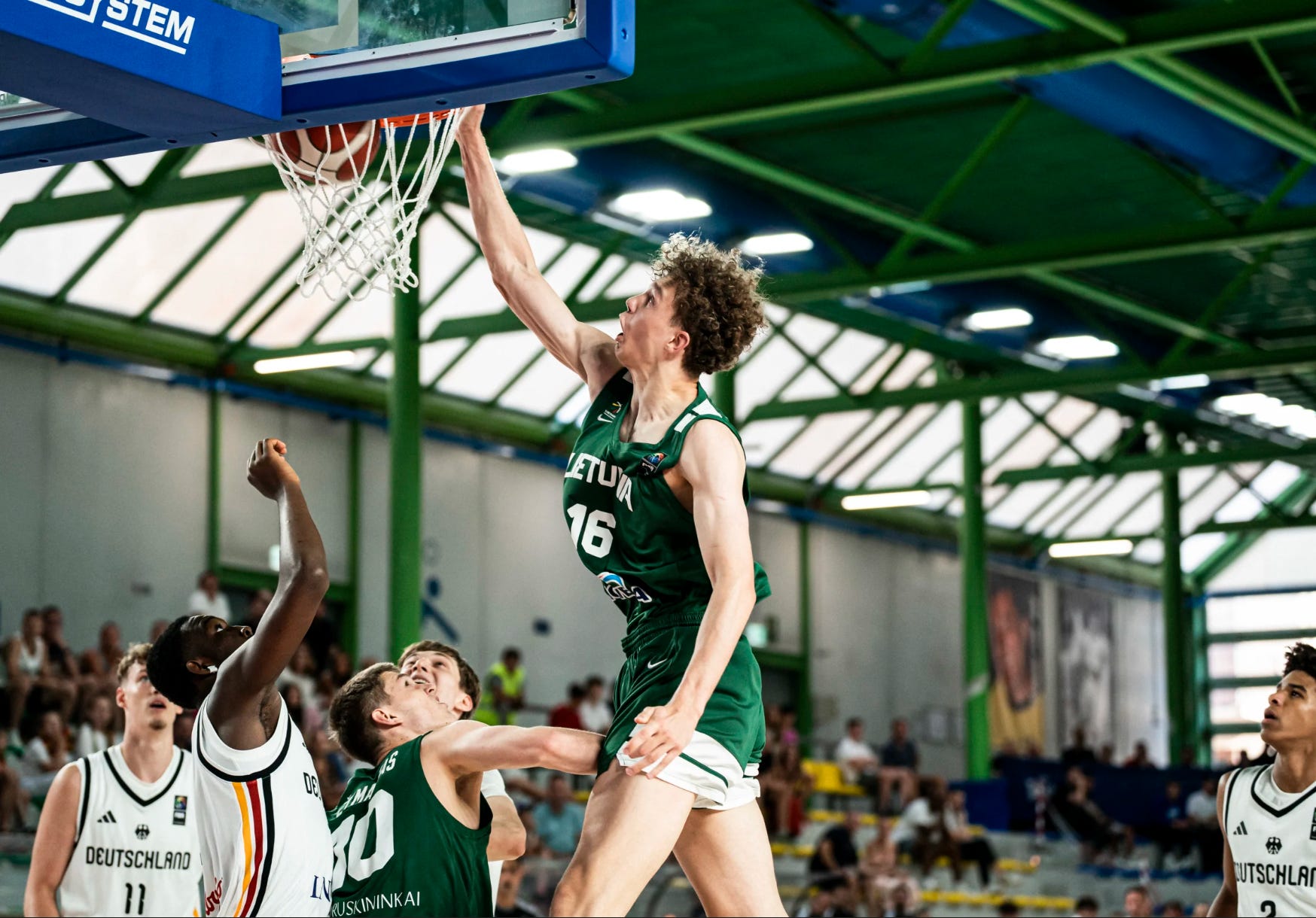
What Did I Learn?
Ignas Stombergas was one of the players whose stock rose the most in my eyes during this tournament.
I came into Trentino already liking his game after watching him earlier this season in Italy. I was impressed by his combination of size, strength, fundamentals and skill. At times, however, I questioned whether he could impose his will against players with similar size and physicality.
This tournament answered a lot of those questions.
I left Trentino believing Stombergas is ready to play high major college basketball right now, and I also think he’s a better NBA prospect than I originally gave him credit for.
He averaged 16.3 points, 8.6 rebounds, 1.7 assists, 2.6 blocks and 1.1 steals, while shooting 68 percent from the field. He also knocked down his only three point attempt, although he finished just 53 percent from the free throw line.
What impressed me most was how complete his interior game looked.
Stombergas is an old school big who can impact the game on both ends of the floor. He has a strong frame, thick lower body and good footwork, yet he’s light on his feet and runs the floor extremely well for his size.
He’s the type of player you have to box out on every possession because he’ll punish teams on the offensive glass. A large portion of his scoring came on offensive rebound put backs, but he was also effective as a cutter, a roll man and on traditional post touches.
Once he caught the ball around the basket, he knew exactly what to do.
I was also impressed with how he ran the floor in transition. He converted nine of his 10 transition field goal attempts, showing that he’s more mobile than people might expect from a kid with his size and strength.
There were also encouraging flashes as a passer. He showed enough feel to make the extra pass and even grabbed rebounds, pushed the ball himself and advanced it ahead in transition.
Defensively, he anchored Lithuania’s interior with his rebounding and rim protection. He has the physical presence to intimidate opponents around the basket while also moving well enough to defend outside the paint on occasion.
What Questions Remain?
The biggest question for me isn’t about his talent.
It’s about how consistently he can impose his will.
I honestly believe Stombergas has the physical tools to dominate players his own age. There aren’t many bigs in Europe who can match his combination of strength, mobility, coordination and skill.
I’d like to see him play with a more consistent mean streak.
There are stretches where he looks capable of taking over a game, then other possessions where he blends into the action more than I’d like. Given his physical advantages, I think he should be one of the most imposing players on the floor every night.
The other question is whether there’s eventually some floor spacing in his future.
I don’t think he needs to become a perimeter shooter right now, but if he eventually develops into a player defenses have to respect outside the paint, it would significantly raise his ceiling.
Where Does the Evaluation Go From Here?
I left Trentino much higher on Stombergas than I was entering the tournament.
I think he has the talent to help a high major college program immediately if he decides to pursue that route, and I also believe he has legitimate NBA potential.
For me, the next step isn’t adding an entirely new skill set.
It’s maximizing the one he already has.
If he develops a more consistent edge and embraces playing through defenders every possession, I think he has a chance to become one of the better big men in his age group.
The physical tools are there.
The skill level is there.
The production is there.
Now it’s simply about putting those traits together every night.
That’s why I’ll continue following his development closely. I came away from this tournament believing Stombergas is much closer to becoming a legitimate NBA prospect than I initially thought.
David Musis | Israel
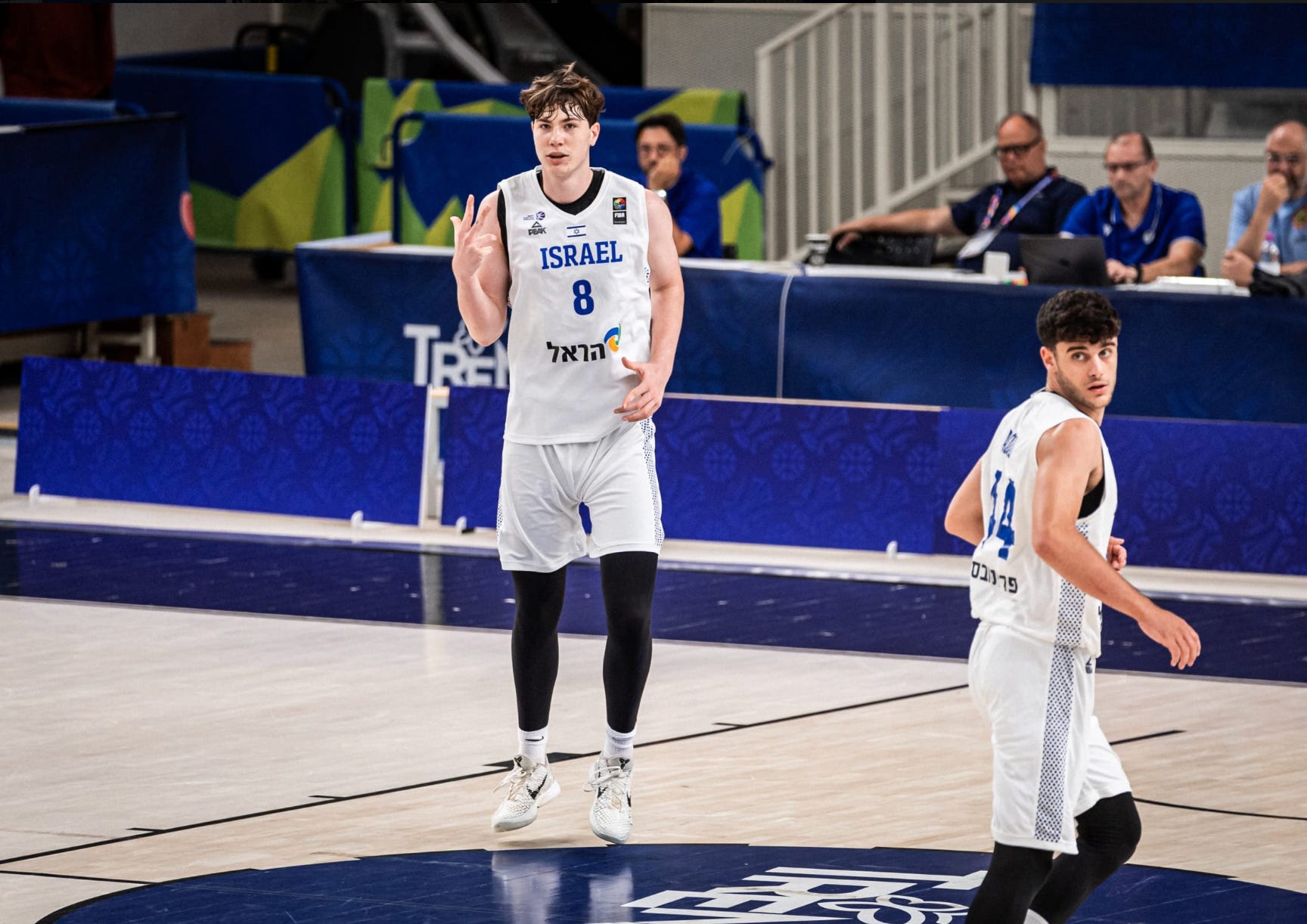
What Did I Learn?
No player surprised me more in Trentino than Israel’s David Musis.
Heading into the tournament, Musis simply wasn’t on my radar. By the end of the week, he had established himself as one of the biggest revelations of the event.
The seven footer, who is committed to Florida Atlantic, averaged 22 points, 11.7 rebounds and 1.6 blocks, while shooting 48 percent from the field, 40 percent from three and 81 percent from the free throw line.
Musis finished second in scoring, first in rebounding, sixth in three point percentage, seventh in blocks and first in overall efficiency.
What immediately stood out was his combination of size and skill.
Compared to many of the other frontcourt players in the tournament, Musis has prototypical size for an NBA center, and it was noticeable the moment he stepped on the floor. He’s a decent athlete with solidmobility, light feet and enough coordination to handle the ball and attack the rim in space.
I thought he was very active on the glass, especially on the offensive end, and he showed he can fill the lanes in transition.
The shooting, however, is what really caught my attention.
Musis looked comfortable spacing the floor, knocking down pick and pop jumpers and even making shots on the move. For a seven footer, he displayed a level of skill and confidence that immediately stood out.
I also appreciated the little details.
He played with good fundamentals, kept the ball high after offensive rebounds to prevent guards from stripping it away and generally looked comfortable operating around the basket.
Defensively, he quietly put together a solid tournament as well, recording two or more blocks in four different games.
What Questions Remain?
The biggest area for growth is his physicality around the basket.
While the overall efficiency was good, I thought Musis missed more makeable finishes in traffic than someone with his size should. There were times when he didn’t always go up through contact or fully use his strength around the rim.
Adding strength should help him become a more dependable finisher.
The other area I’ll be watching closely is his passing and overall feel with the ball.
Musis finished the tournament with just five assists against 21 turnovers. Many of those turnovers came from forcing drives into traffic, offensive fouls or trying to do a little too much after putting the ball on the floor.
The shooting and straight line driving ability are encouraging, but he’ll need to make quicker decisions and improve as a passer if he’s going to maximize his offensive versatility.
Where Does the Evaluation Go From Here?
I’m really interested to see how Musis’ game translates to the college level at Florida Atlantic.
Based on what I saw in Trentino, I don’t think he’ll be flying under the radar much longer.
If the shooting proves to be legitimate, there is a very intriguing foundation to build on. Seven footers who can space the floor, rebound and protect the rim will always attract attention, and Musis showed flashes of all three.
The next step is becoming stronger around the basket, improving his decision making and proving that the perimeter shooting translates over a larger sample.
If those areas continue to develop, I think he has a chance to establish himself as a legitimate pick and pop center with professional upside.
He entered the tournament as one of the event’s biggest unknowns.
He left as one of its biggest surprises.
Chrysostomos Chatzilamprou | Greece
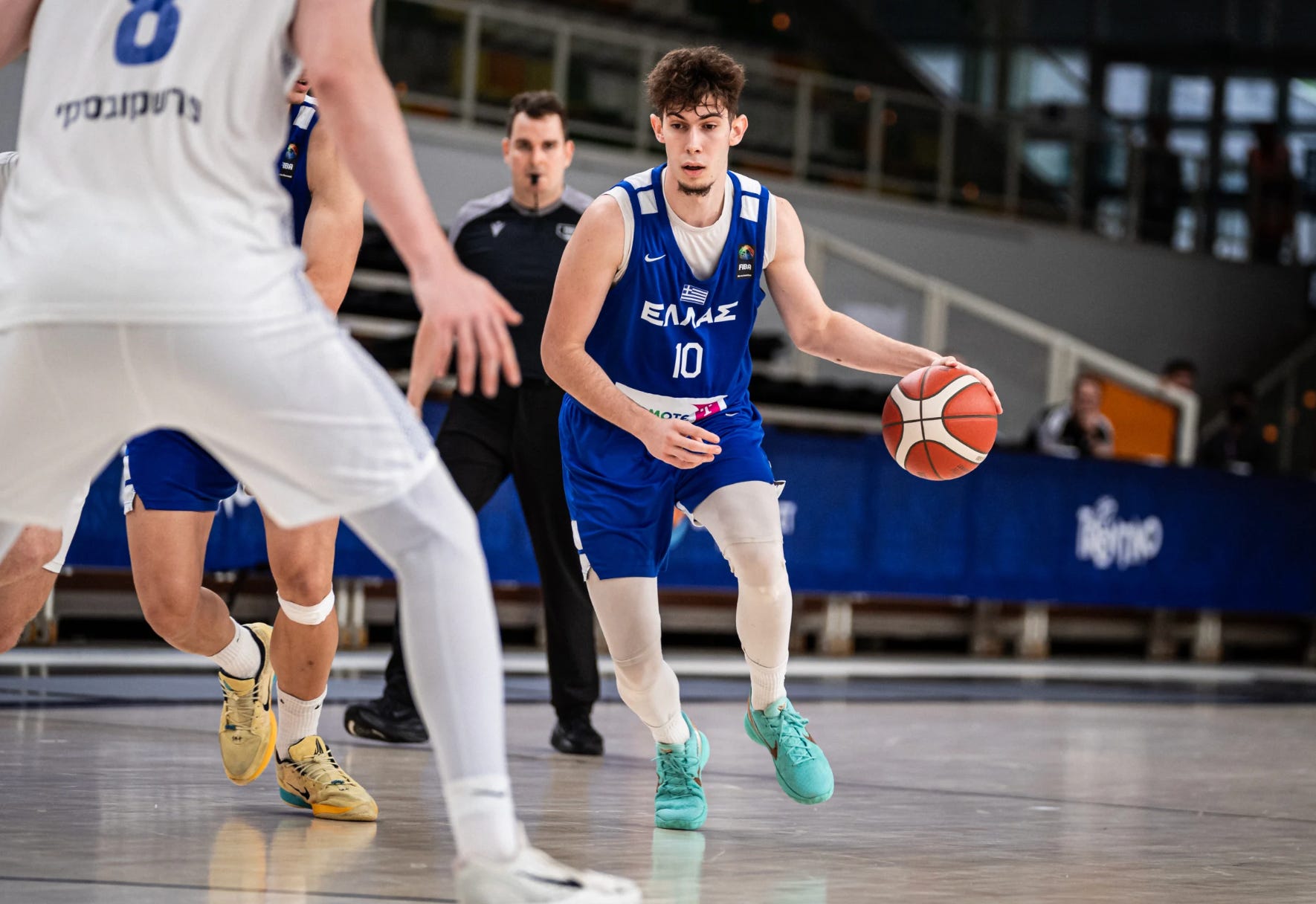
What Did I Learn?
Another player who was a revelation for me in Trentino was Greece’s Chrysostomos Chatzilamprou.
I wasn’t very familiar with his game entering the tournament, but by the end of the week, he had become one of the players I’ll be following most closely over the next few years.
The 6’6” wing averaged 17.1 points, 8.4 rebounds and 2.7 assists, while shooting 44 percent from the field, 37 percent from three and 63 percent from the free throw line.
His name wasn’t mentioned among the top prospects entering the tournament, but based on what I saw, I think he deserves to be part of that conversation.
His combination of size, shooting and athleticism immediately caught my attention.
Chatzilamprou is a left handed shooter who knocked down 45 percent of his catch and shoot threes, and he showed he could score in a variety of ways. He attacked closeouts, created baskets in isolation, finished in transition and even handled the ball in pick and roll situations.
I also thought he was one of the better functional athletes in the tournament and produced one of the best highlights of the tournament with a powerful left handed poster dunk over a Spanish big.
Another part of his game that impressed me was his rebounding.
Averaging 8.4 rebounds per game as a wing speaks to both his toughness and activity level. He played with energy and wasn’t afraid to mix it up inside.
I also came away encouraged by his decision making.
While I don’t necessarily view him as an advantage creator, he looked the part of a high IQ ball mover who understands how to keep the offense flowing. He finished the tournament with 19 assists against only seven turnovers, showing the ability to make quick, simple decisions while taking care of the basketball.
What Questions Remain?
The biggest question for me is on the defensive end.
For a player with his physical tools, I expected a much bigger defensive impact.
He finished the tournament with only five total stocks, recording no blocked shots and just five steals over seven games.
That was surprising.
I would’ve loved to see him be more of a disruptor on the defensive end. The rebounding shows the motor is there. I’d simply like to see that same activity translate on both sides of the ball.
The other question involves shot selection.
Although he shot 37 percent from three, I thought that number was weighed down by him settling for contested threes. He was deadly on catch and shoot opportunities but occasionally fell in love with difficult pull up threes.
I like that he showed flashes of creating off the dribble, but there were times when he leaned on those difficult shots more than necessary.
Where Does the Evaluation Go From Here?
Chatzilamprou definitely put himself on my radar.
His size, shooting, athleticism and rebounding give him a very intriguing foundation, and I think he turned plenty of heads with his performance in Trentino.
The next step is becoming a more impactful defender.
If he can pair his offensive production with the same level of activity and playmaking on the defensive end that he showed on the glass, I think his overall profile becomes much more complete.
I’m also interested to see if the catch and shoot success carries over while he becomes more selective with the off the dribble jumpers.
Regardless, he was one of the biggest discoveries of the tournament for me.
I arrived in Trentino knowing very little about his game.
I left believing he’s a prospect worth following closely.
Aviv Aronov | Israel
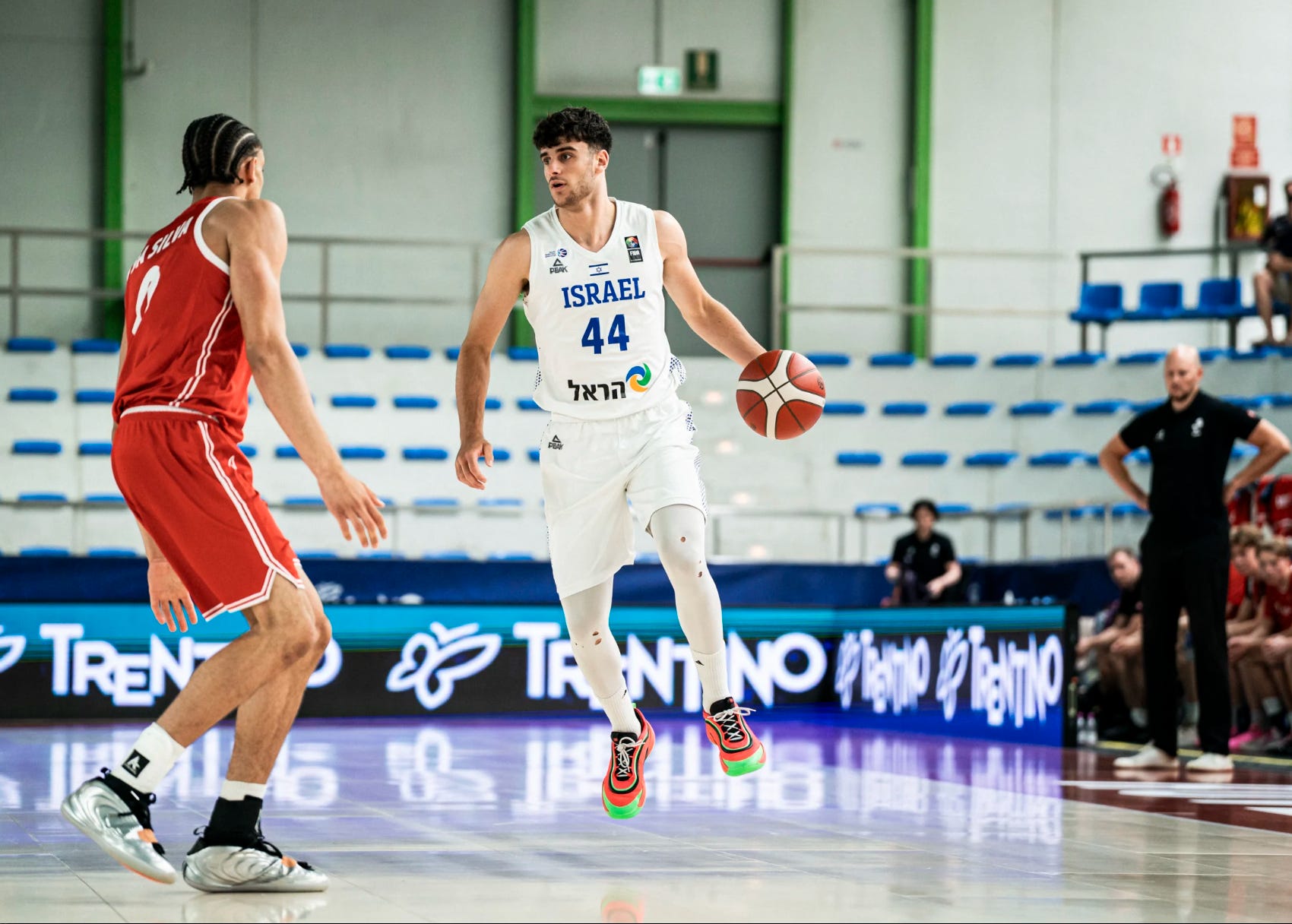
What Did I Learn?
Last but not least is Israel’s Aviv Aronov, a 6’4'“ guard who will play next season at Eastern Michigan.
Aronov averaged 20.8 points, 4.8 rebounds and 3.2 assists, while shooting 40 percent from the field, 28 percent from three and 86 percent from the free throw line.
The biggest takeaway for me is that Eastern Michigan may have found a steal.
I think Aronov has a chance to step in and contribute meaningful minutes as a freshman because of his offensive versatility and feel for the game.
He has good positional size for a point guard, but I also think he can play both on and off the ball. There’s some creativity to his game. He likes operating as a pick and roll ball handler, is comfortable pulling up from three and plays with a competitive edge that stood out throughout the tournament.
I also believe he’s a better shooter than his overall percentages suggest.
Aronov knocked down 38 percent of his catch and shoot threes, and I thought he showed legitimate range both off the catch and off the dribble. The overall three point percentage doesn’t fully reflect the quality of shooter I think he can become.
He’s also a better athlete than he sometimes gets credit for. While he isn’t an explosive guard, he had several plays that showed he can finish above the rim and make athletic plays when he had a runway.
I also came away impressed with his well he rebounded the ball, averaging nearly five rebounds per game from the backcourt.
What Questions Remain?
The biggest question is whether Aronov projects more as a point guard or a combo guard.
I like him with the ball in his hands, but I’m not convinced he’ll always have that luxury as the level of competition increases.
Athleticism is part of that equation.
There were moments when he made impressive athletic plays, but there were also stretches where opposing defenses didn’t appear overly concerned about his first step. Teams frequently pressured him full court and forced him to work for everything he created.
When he couldn’t gain an advantage off the dribble, possessions often ended with difficult pull up threes. He finished just 7 for 27 on off the dribble three point attempts, and I thought he leaned on that shot a little too often when other options weren’t available.
As a passer, I thought he made the right reads most of the time, but I didn’t see many advanced playmaking reads that suggest he’ll naturally transition into a full time lead guard. At times he also displayed a bit of a gunslinger mentality, firing passes into tight windows that resulted in unnecessary turnovers.
Where Does the Evaluation Go From Here?
I’m really interested to see how Aronov adjusts to college basketball.
While I don’t currently view him as an NBA prospect, I do think he has the offensive skill set to become a productive college guard.
His ability to play both on and off the ball and stretch the floor gives him a chance to carve out a significant role at Eastern Michigan.
The next step will be showing that he can become a more efficient decision maker while proving he can handle the physicality and athleticism of the college game.
If he does that, I wouldn’t be surprised if he develops into one of the better guards in his conference over the next few years.
Based on what I saw in Trentino, Eastern Michigan may have landed one of the better under-the-radar international additions in this recruiting class.
Good work. One thing worth noting with Kroger is that he shot 73% from the line on 83 attempts across all competitions this season, which makes the shooting outlook slightly more realistic if he keeps building on it. Right now he barely takes them though, so it'll have to be pretty rapid development.